

THE QUICK ANSWER
What should you know first?
When a bedroom supply leak wets carpet, the pad usually stays wet longer than the surface. Stop the water source first, then decide whether the affected area can be dried in place or needs pad removal and replacement. Get a written scope that separates source repair, extraction and drying, and reconstruction before comparing quotes.
Prepare your questions ↓AT A GLANCE
The decisions behind the quote.
Surface vs. pad
Carpet fibers can dry quickly with airflow, but the pad holds water and may stay damp longer. Press the pad near the leak to check for hidden moisture.
Source repair vs. cleanup
Fixing the supply line stops new water. Cleanup addresses water already released. These are separate scopes and may involve different trades.
Drying vs. reconstruction
Extraction and drying aim to remove moisture. Reconstruction replaces materials that cannot be dried or were removed, such as pad, carpet, or baseboard.
01 / PLAN YOUR CLEANUP
Start With the Source, Not the Carpet
A bedroom supply leak is a plumbing problem first. If water is still running, the carpet and pad will keep getting wet no matter how much you extract. Shut off the water supply if it is safe and accessible. If you cannot stop the source safely, contact a qualified plumber or building maintenance provider. Avoid electrical hazards near wet carpet, and do not stand in water while touching electrical devices or outlets.
Once the source is stopped, the cleanup question becomes: what is wet, and how deep? The carpet surface, the pad, the subfloor, and nearby baseboards can all hold moisture. The pad is often the deciding factor because it sits between the carpet and the subfloor and can trap water.
02 / PLAN YOUR CLEANUP
Surface vs. Pad: What Usually Dries and What Usually Does Not
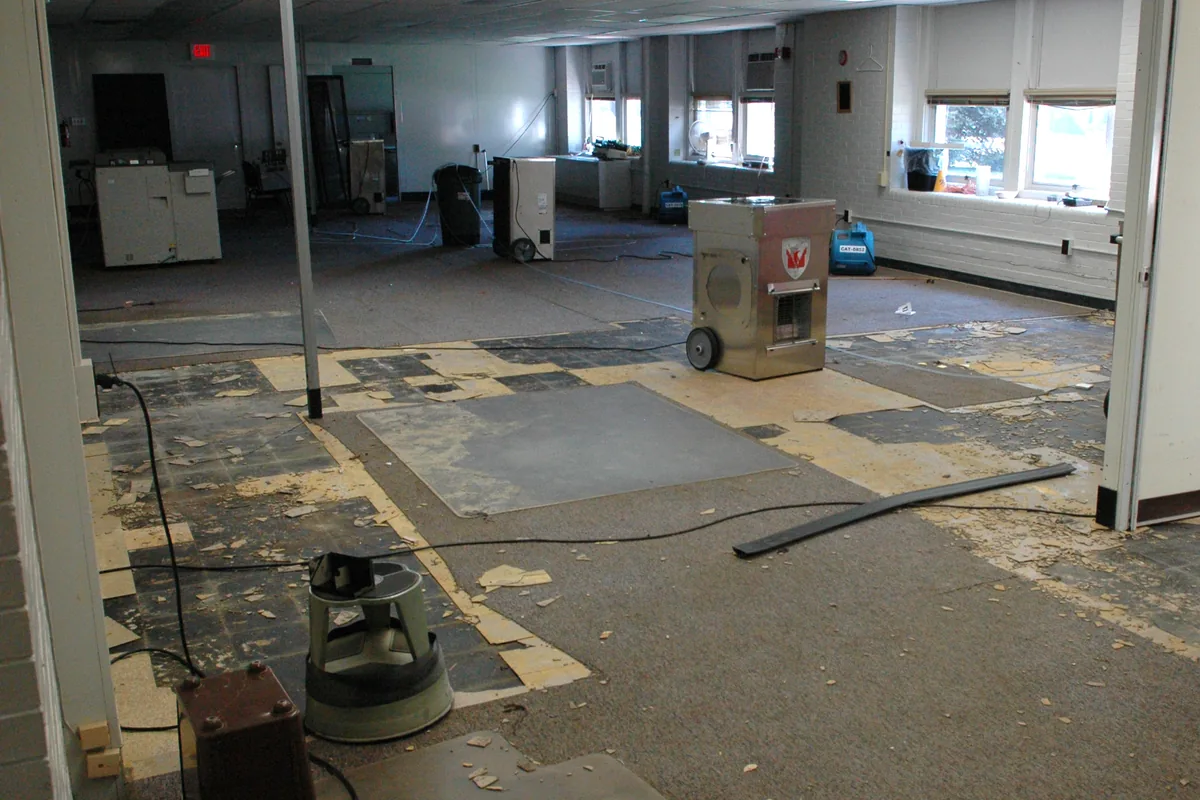
Carpet fibers are designed to dry relatively quickly with airflow. The pad underneath is thicker and more absorbent. When a supply leak releases water over time, the pad can stay wet long after the surface feels dry. Press the pad near the leak. If it feels spongy or releases water, it is likely holding moisture.
- Carpet surface: often dries with airflow, but may stay damp if the pad below is wet.
- Carpet pad: commonly holds water, may need removal if soaked or contaminated.
- Subfloor: can absorb moisture from a wet pad; drying may require access.
- Baseboards and wall edges: can wick water upward and may need separate drying.
This is why surface appearance is not a reliable test. A carpet that looks fine can still have a wet pad underneath. If the pad is soaked, removal and replacement may be more practical than trying to dry it in place. A qualified professional can help you decide based on the pad type, water source, and how long it has been wet.
03 / PLAN YOUR CLEANUP
Source Repair vs. Cleanup: Two Different Scopes
Source repair stops the leak. Cleanup removes the water that already escaped. These are separate tasks and may involve different providers. A plumber or maintenance technician handles the supply line. A water damage or restoration provider handles extraction, drying, and reconstruction. Some companies offer both, but the scope should still separate them.
If you are comparing quotes, ask each provider to list source repair separately from cleanup. This prevents confusion about what is included. It also helps you see whether the quote assumes the leak is already fixed or whether it includes fixing it.
04 / PLAN YOUR CLEANUP
Extraction and Drying vs. Reconstruction
Extraction and drying remove moisture. Reconstruction replaces materials that cannot be dried or were removed. In a bedroom supply leak, extraction and drying might include wet-vacuuming the carpet, setting air movers and dehumidifiers, and monitoring moisture levels. Reconstruction might include replacing pad, reinstalling carpet, or repairing baseboards.
These are different line items. A quote that includes drying but not reconstruction may leave you with a dry room and no carpet pad. A quote that includes reconstruction but not drying may replace materials before the subfloor is dry. Ask for a scope that addresses both, even if they are priced separately.
For a closer look at how drying is planned and monitored, see the Structural Drying guide.
05 / PLAN YOUR CLEANUP
Quote Scope vs. Final Cost: What to Compare
The Ask whether the written price is fixed for a defined scope or an estimate, and how any added work would be approved. That does not mean the quote was wrong, but it does mean you should compare scopes rather than bottom-line numbers alone. Ask what is included, what is excluded, and how changes are handled.
- Does the scope include source repair, or is that separate?
- Does it include extraction and drying, or only cleanup?
- Does it include pad removal and replacement, or only drying?
- Does it include reconstruction such as carpet reinstallation or baseboard repair?
- Are there exclusions for hidden moisture, mold, or subfloor damage?
A clear scope helps you compare quotes fairly. It also gives you a checklist to discuss if the provider finds more moisture than expected. Ask for the scope in writing before work begins.
06 / PLAN YOUR CLEANUP
A Practical Decision Aid for Bedroom Supply Leaks
Use these questions to decide your next step. If the leak is still running, stop it first. If the pad is soaked, plan for possible removal. If the wet area is small and the pad is only damp, drying in place may be an option. If you are unsure, contact a qualified professional.
- Is the water source stopped? If not, stop it or contact a qualified plumber.
- Is the pad wet? Press it near the leak. If it is soaked, removal may be needed.
- How far has water spread? Check under walls, closets, and adjacent rooms.
- Is there any electrical hazard? Avoid wet electrical devices and outlets.
- Do you have a written scope? Ask for one that separates repair, drying, and reconstruction.
07 / PLAN YOUR CLEANUP
Preparing for a Quote Call
When you call for a quote, have basic information ready. This helps the provider give you a more useful scope. You do not need to diagnose the problem yourself. Describe what you see and ask what the next step is.
- Where is the leak? (e.g., bedroom supply line under sink or behind wall)
- Is the water stopped?
- What is wet? (carpet, pad, baseboard, subfloor)
- How large is the wet area?
- How long has it been wet?
- Have you checked for electrical hazards?
Ask the provider to explain what they will do first, what they will check, and how they will decide whether the pad can be dried or needs removal. A good scope will separate source repair, extraction and drying, and reconstruction. It will also note what is excluded and how changes are handled.
08 / PLAN YOUR CLEANUP
When to Call a Qualified Professional
Call a qualified professional if the leak is not stopped, the wet area is large, the pad is soaked, or you see signs of electrical hazards. Avoid electrical hazards and contact qualified help where appropriate without delaying reasonable mitigation. If you are unsure whether the pad can be dried in place, a professional assessment can help you avoid replacing materials unnecessarily or leaving moisture trapped.
YOUR WRITTEN-SCOPE CHECKLIST
Turn the conversation into clear answers.
Check an item when you understand how it is addressed in the written scope. These checks organize your questions; they do not certify the condition of a property.
CHECK A WRITTEN ESTIMATE
What do the listed charges add up to?
Enter amounts from an estimate you already have. This adds your figures; it does not predict restoration prices. Blank fields count as zero, so confirm missing charges with the provider.
Only the amounts entered are included. Taxes, rebuilding, source repair and changes may be additional.
FREE QUOTE-PREPARATION TOOL
Know what to say when you call.
Build a short description using what you already know. Your notes stay on this page; this does not send a request or book service.
Your call notes
Questions to ask: Stop the water, check the pad, and get a written scope that separates source repair, drying, and reconstruction before you compare quotes. Do you serve my address? What assessment fees apply, and what is excluded?
Common questions
Can carpet pad be dried in place after a supply leak?
Sometimes, if the pad is accessible, the water is clean, and drying equipment can reach it. In many cases, pad is removed because it traps water and restricts airflow. A qualified professional can assess whether drying in place is appropriate.
Does the carpet surface feel dry even when the pad is wet?
Yes. The surface can feel dry to the touch while the pad underneath remains damp. Check the pad directly and look for signs such as a musty odor or discoloration.
What should a written scope include for a bedroom supply leak?
Ask for the source repair, extraction and drying plan, any removal or replacement of pad or carpet, and reconstruction steps. The scope should separate these items so you can compare quotes clearly.
When should I call a qualified professional?
Call when the leak is not stopped, the wet area is large, the pad is soaked, or you see signs of electrical hazards. Avoid electrical hazards and contact qualified help where appropriate without delaying reasonable mitigation.
YOUR NEXT STEP
A clearer conversation.
A more useful quote.
Have your ZIP code and property details ready. Confirm address coverage, fees and the proposed scope before booking.
Call for Quote · (833) 628-1561 ↗Houston Water Recovery connects callers with independent providers. Availability, qualifications, work and pricing are confirmed by the provider.
Sources & further reading
This guide explains public guidance and questions to ask. It is not a property assessment or a documented customer case, and no technician review is claimed.
CDC: Electrical hazards after flooding ↗EPA: Flooded homes cleanup guidance ↗