

THE QUICK ANSWER
What should you know first?
A thunderstorm ceiling leak usually involves two connected but separate scopes: the roof or exterior source that let water in, and the ceiling, insulation, and room below that received it. Start by stopping safe access to the wet area, then document what you see. A roofer or qualified exterior professional addresses the source; a water-cleanup provider addresses extraction, drying, and moisture mapping. Reconstruction — drywall, paint, texture, trim — is typically a later scope. Ask each provider to state what is included and excluded so you can compare quotes fairly.
Prepare your questions ↓AT A GLANCE
The decisions behind the quote.
Roof source scope
A roofer or qualified exterior professional identifies and repairs the entry point: missing or lifted shingles, flashing, penetrations, or storm debris. This scope is about stopping water entry, not drying the interior.
Interior cleanup scope
A water-cleanup provider assesses moisture in the ceiling, insulation, wall cavities, and floor below, then extracts standing water and sets drying equipment. This scope is about removing water and drying affected materials.
Reconstruction scope
Drywall replacement, texture, paint, trim, and insulation replacement are usually reconstruction. They often happen after drying is complete and moisture readings support closing the area.
01 / PLAN YOUR CLEANUP
Start with the source, then the room below
A thunderstorm can push water through roof flashing, lifted shingles, or penetrations. Water then travels along framing before it shows up as a ceiling stain. That travel path is why the visible stain may not be directly under the roof entry point. Treat the roof source and the interior moisture as two separate questions: where did water enter, and where did it go?
If water is actively dripping and it is safe to do so, place a bucket and move items away from the drip. Do not climb onto a wet roof, and do not stand on a chair to probe a sagging ceiling. If you see sparking, hear buzzing, or smell burning near wet electrical components, keep away and contact qualified help.
02 / PLAN YOUR CLEANUP
What belongs in the roof-source scope
The roof-source scope is about stopping water entry. A roofer or qualified exterior professional may inspect shingles, flashing, vents, skylights, and chimney penetrations. They may also check gutters and downspouts if water is backing up or draining toward the house. This scope does not usually include drying the ceiling or repairing interior finishes.
- Roof covering and underlayment assessment
- Flashing, vent, and penetration inspection
- Storm debris removal from the roof surface
- Gutter and downspout check for overflow or blockage
- Temporary weather protection where appropriate
- Written description of the repair performed or recommended
03 / PLAN YOUR CLEANUP
What belongs in the interior cleanup scope
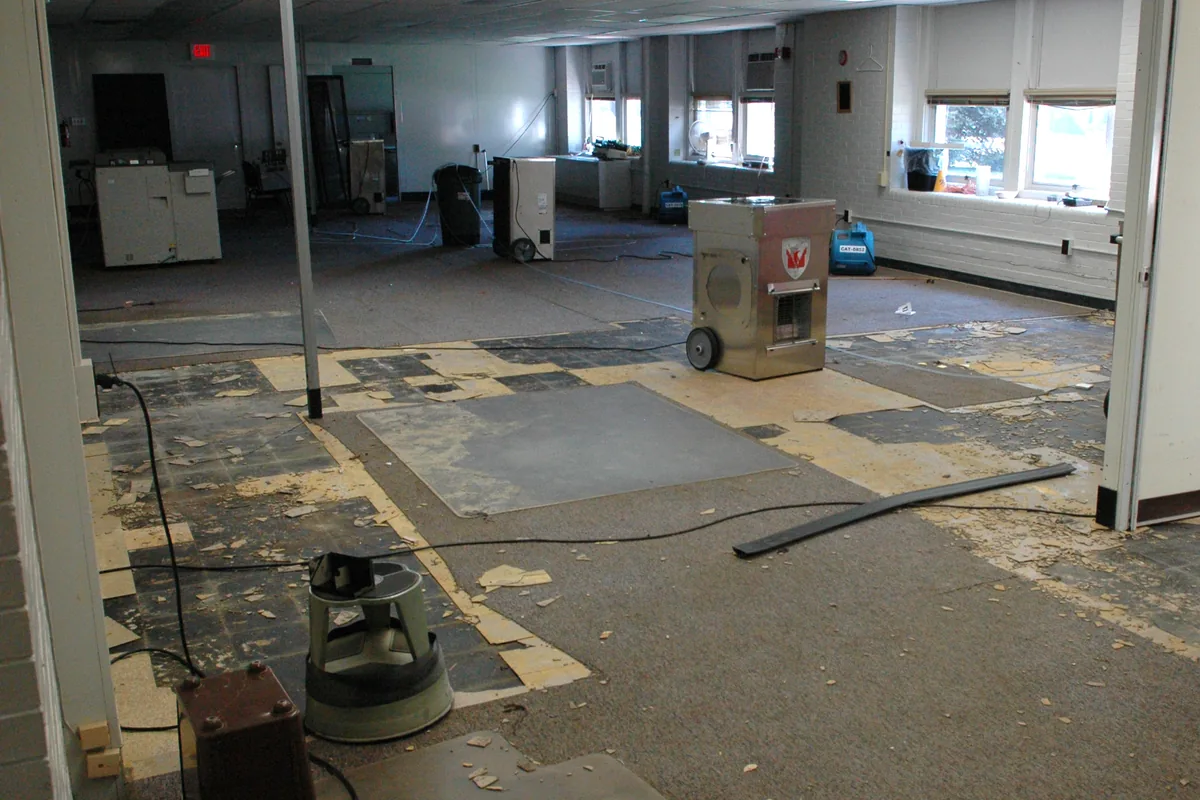
The interior scope is about removing water and drying affected materials. A water-cleanup provider may use moisture meters and thermal imaging to map where water traveled. They may extract standing water, remove wet insulation, and set drying equipment. They may also check wall tops, adjacent rooms, and the floor below because water follows gravity and framing.
Ask whether the quote includes moisture mapping, extraction, drying equipment, and monitoring visits. Monitoring matters because drying progress is not visible from the surface. A ceiling can feel dry to the touch while insulation or framing above remains wet.
04 / PLAN YOUR CLEANUP
Extraction and drying are not reconstruction
Extraction and drying remove water and bring materials to a documented dry standard. Reconstruction replaces materials that were removed or damaged: drywall, texture, paint, trim, and sometimes insulation. These are different scopes with different providers and different timelines. A quote that says "ceiling repair" may mean only patching drywall, only drying, or both. Ask for a line-item breakdown.
- Extraction: removing standing water from the ceiling, floor, or cavities
- Drying: moving air and using dehumidification to reduce moisture
- Monitoring: checking moisture readings over time
- Reconstruction: replacing drywall, texture, paint, and trim
- Source repair: fixing the roof or exterior entry point
05 / PLAN YOUR CLEANUP
A simple scope comparison worksheet
Use the same line items for every provider so you can compare fairly. For each quote, mark whether the task is included, excluded, or unclear. If a provider says a task is not theirs, ask who typically handles it. This keeps you from assuming one quote covers everything.
- Roof source inspection and repair: included, excluded, or unclear?
- Interior moisture assessment: included, excluded, or unclear?
- Extraction of standing water: included, excluded, or unclear?
- Drying equipment and monitoring: included, excluded, or unclear?
- Removal of wet insulation or ceiling material: included, excluded, or unclear?
- Reconstruction of drywall, texture, and paint: included, excluded, or unclear?
- Final moisture verification before closing walls or ceilings: included, excluded, or unclear?
06 / PLAN YOUR CLEANUP
Quote scope is not final cost
A quote describes a proposed scope of work. The Ask whether the written price is fixed for a defined scope or an estimate, and how any added work would be approved. That does not mean the quote was dishonest; it means the scope was incomplete. Ask how changes are approved, who documents them, and whether you will see the change in writing before work continues.
For insurance, keep your own photo log and a simple written timeline. Ask whether the provider reports directly to your insurer or whether you are responsible for submitting documentation. Do not assume a quote guarantees coverage or a final price.
07 / PLAN YOUR CLEANUP
How to prepare for the quote call
Before you call, gather a few facts: when the storm occurred, when you first noticed the leak, where the stain is, and whether water is still dripping. Note any prior ceiling repairs. If you have photos, have them ready. Ask the provider what they need from you and whether they will inspect the roof, the ceiling, or both.
- Storm date and time you noticed the leak
- Location and size of the ceiling stain or drip
- Whether water is actively dripping now
- Any prior roof or ceiling repairs you know about
- Photos of the ceiling, floor below, and exterior roof area if safely visible
- Your insurance claim number if you have already opened a claim
- Questions about included and excluded tasks
08 / PLAN YOUR CLEANUP
Safety boundaries for storm leaks
Avoid electrical hazards. Do not touch wet electrical fixtures, outlets, or switches if you suspect water contact. If you see sparking, hear buzzing, or smell burning, keep away and contact qualified help. Do not climb onto a wet roof. Do not enter a room with a sagging ceiling that looks ready to collapse.
Reasonable mitigation — such as moving belongings away from a drip or placing a bucket where it is safe — can limit damage. But do not delay calling qualified help for electrical, structural, or contamination concerns. The CDC and EPA publish general safety guidance for flooded homes and electrical hazards after flooding; use them as background, not as a substitute for local professional assessment.
09 / PLAN YOUR CLEANUP
When to call a water-cleanup provider
Call a water-cleanup provider when the ceiling is wet, stained, sagging, or when water has reached insulation, wall cavities, or the floor below. They can assess moisture you cannot see and recommend extraction and drying. If you need a starting point, see our Flood Cleanup guide for general cleanup considerations.
If the roof source is still open, coordinate both scopes. Drying the interior while rain continues to enter may waste effort. Ask the roofer and the cleanup provider how they will sequence their work so the source is addressed before or alongside interior drying.
YOUR WRITTEN-SCOPE CHECKLIST
Turn the conversation into clear answers.
Check an item when you understand how it is addressed in the written scope. These checks organize your questions; they do not certify the condition of a property.
CHECK A WRITTEN ESTIMATE
What do the listed charges add up to?
Enter amounts from an estimate you already have. This adds your figures; it does not predict restoration prices. Blank fields count as zero, so confirm missing charges with the provider.
Only the amounts entered are included. Taxes, rebuilding, source repair and changes may be additional.
FREE QUOTE-PREPARATION TOOL
Know what to say when you call.
Build a short description using what you already know. Your notes stay on this page; this does not send a request or book service.
Your call notes
Questions to ask: Separate the roof source from the ceiling and room below, then separate extraction and drying from reconstruction. Ask every provider what is included, what is excluded, and what still needs a second trade. Do you serve my address? What assessment fees apply, and what is excluded?
Common questions
Should I call a roofer or a water-cleanup provider first?
If water is actively entering and it is safe to do so, address the source first or at the same time as interior mitigation. A roofer or qualified exterior professional handles the roof entry point. A water-cleanup provider handles the ceiling, insulation, and room below.
Does ceiling drying include drywall repair?
Usually not. Extraction and drying are one scope; drywall, texture, paint, and trim are reconstruction. Some providers offer both, but you should still ask for a line-item breakdown so you can compare what is included and what is excluded.
How do I compare quotes when one includes roof repair and another does not?
Use a scope worksheet. List roof source repair, interior moisture assessment, extraction, drying equipment, monitoring, and reconstruction as separate lines. A lower quote may exclude a trade or a step, so compare the included tasks rather than the total alone.
What should I document before cleanup starts?
Photograph the ceiling stain, any sagging, the drip path, and the floor below. Note the storm date and when you first noticed the leak. Keep a simple log of who you called, when, and what they said was included. This helps you and your insurer compare scopes.
YOUR NEXT STEP
A clearer conversation.
A more useful quote.
Have your ZIP code and property details ready. Confirm address coverage, fees and the proposed scope before booking.
Call for Quote · (833) 628-1561 ↗Houston Water Recovery connects callers with independent providers. Availability, qualifications, work and pricing are confirmed by the provider.
Sources & further reading
This guide explains public guidance and questions to ask. It is not a property assessment or a documented customer case, and no technician review is claimed.
CDC: Electrical hazards after flooding ↗EPA: Flooded homes cleanup guidance ↗