

THE QUICK ANSWER
What should you know first?
A garbage disposal leak under the sink is usually a drain-source issue, not a supply-line flood. Stop using the disposal, avoid the electrical outlet under the cabinet, and treat the wet cabinet as a drying project separate from the repair that stopped the leak. Get a scope-based quote that lists source repair, extraction, drying, and any cabinet reconstruction as distinct line items.
Prepare your questions ↓AT A GLANCE
The decisions behind the quote.
Source repair vs. cleanup
The disposal leak is a plumbing source. Repairing the drain connection stops the water. Cleaning and drying the cabinet addresses the moisture that remains. These are different scopes with different providers.
Extraction vs. drying
Extraction removes standing water from the cabinet floor. Drying removes moisture from wood, particleboard, and air. A quote that lists only extraction may not include drying equipment or monitoring.
Quote scope vs. final cost
A scope-based quote lists what will be done: source repair, extraction, drying, cabinet removal, reconstruction. Ask whether the written price is fixed for a defined scope or an estimate, and how any added work would be approved.
01 / PLAN YOUR CLEANUP
Why a disposal leak is a drain-source problem, not a flood
A garbage disposal leak under the sink usually comes from a drain connection, a dishwasher drain line, or a loose mounting ring. Unlike a supply-line burst, the water is not under continuous pressure. It appears when the disposal runs or the sink drains. That distinction matters because the source repair is a plumbing task, while the cleanup is a drying task. Mixing them into one vague scope can leave you with a fixed drain and a still-wet cabinet.
The cabinet under a sink is often made of particleboard or plywood. These materials absorb water and can swell, delaminate, or lose structural strength. The longer moisture stays, the more likely the cabinet base or side panel needs replacement rather than drying. That is why prompt safe action matters: stop using the disposal, avoid the electrical outlet, and begin drying the cabinet as soon as the source is controlled.
02 / PLAN YOUR CLEANUP
Source repair vs. cleanup: two different scopes
Source repair means fixing the disposal drain connection so it no longer leaks. Cleanup means removing water, drying the cabinet, and addressing any damaged materials. These are separate scopes. A plumber may handle the source repair but not the drying. A drying provider may handle the cabinet but not the drain. Some full-service companies handle both, but you should confirm which scope each provider covers.
- Source repair: tighten or replace the drain connection, gasket, or mounting ring; test the disposal and dishwasher drain.
- Extraction: remove standing water from the cabinet floor and any pooled water in nearby areas.
- Drying: place air movers or dehumidifiers, monitor moisture levels, and confirm the cabinet is dry.
- Reconstruction: replace swollen cabinet base, side panels, or flooring if drying is not enough.
03 / PLAN YOUR CLEANUP
Extraction vs. drying: why both may appear on a quote
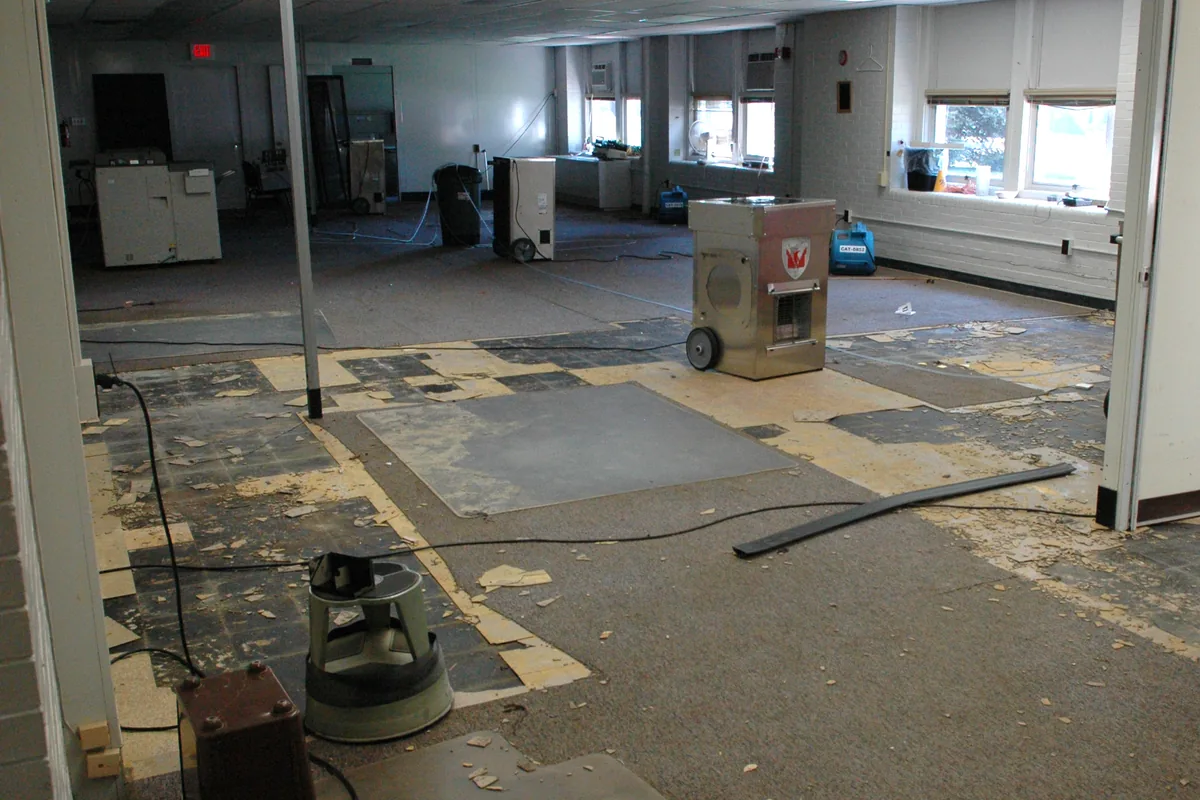
Extraction removes visible standing water. Drying removes moisture that has soaked into wood, particleboard, and the air inside the cabinet. A quote that lists only extraction may leave the cabinet damp. A quote that lists only drying may not address pooled water that slows the process. Ask whether both are included and whether moisture monitoring is part of the scope.
If the cabinet floor is warped or the particleboard has swelled, drying may not restore it. In that case, reconstruction becomes part of the scope. This is not a failure of the drying process; it is a material limitation. A scope-based quote should note that reconstruction is a possibility if hidden damage is found.
04 / PLAN YOUR CLEANUP
Quote scope vs. final cost: what to ask before you approve work
Ask for written approval before additional work is added. Hidden moisture, damaged cabinet materials, or a second leak point can change the work. Ask the provider to separate source repair, extraction, drying, and reconstruction as line items. That way you can compare quotes by what they actually include, not just by a single number.
- Does the quote include the plumbing source repair, or only drying?
- Does it include extraction of standing water and drying equipment?
- Is moisture monitoring included, and how is drying verified?
- What happens if the cabinet base is swollen or delaminated?
- Are there separate line items for reconstruction and material replacement?
- Who handles the electrical outlet and any wiring concerns?
05 / PLAN YOUR CLEANUP
Safe action while you wait for a qualified provider
Avoid electrical hazards. Do not touch wet cords, outlets, or switches inside the cabinet. If the outlet is wet or you see sparks, stay away and contact a qualified electrician. For the leak itself, stop using the disposal and do not run the dishwasher. Place a bucket under the leak if it is safe to do so, and remove stored items from the cabinet to improve airflow.
Do not delay reasonable mitigation. Removing standing water with a towel or mop, opening the cabinet doors, and running a fan can reduce the scope while you arrange for a qualified plumber or drying provider. If the cabinet stays wet, shows swelling, or develops a musty odor, seek qualified help rather than relying on a fan alone.
06 / PLAN YOUR CLEANUP
When to call a qualified professional
Call a qualified plumber if the disposal drain connection is loose, cracked, or leaking after you stop using it. Call a qualified drying provider if the cabinet remains damp, the wood is swelling, or you are unsure whether moisture has reached adjacent materials. If you are dealing with both, ask whether one provider can coordinate both scopes or whether you need two separate calls.
For background on electrical safety after water exposure, see the CDC guidance on electrical hazards after flooding. For general cleanup principles, the EPA flooded homes guidance is a useful reference. These sources are background only; they do not replace a qualified professional assessment of your specific situation.
YOUR WRITTEN-SCOPE CHECKLIST
Turn the conversation into clear answers.
Check an item when you understand how it is addressed in the written scope. These checks organize your questions; they do not certify the condition of a property.
CHECK A WRITTEN ESTIMATE
What do the listed charges add up to?
Enter amounts from an estimate you already have. This adds your figures; it does not predict restoration prices. Blank fields count as zero, so confirm missing charges with the provider.
Only the amounts entered are included. Taxes, rebuilding, source repair and changes may be additional.
FREE QUOTE-PREPARATION TOOL
Know what to say when you call.
Build a short description using what you already know. Your notes stay on this page; this does not send a request or book service.
Your call notes
Questions to ask: Stop using the disposal, avoid the electrical outlet, and treat the wet cabinet as a drying project separate from the repair. Get a scope-based quote that lists source repair, extraction, drying, Do you serve my address? What assessment fees apply, and what is excluded?
Common questions
Is a garbage disposal leak under the sink a water-damage emergency?
It is a drain-source leak, not a supply-line flood, so the volume is usually limited. The priority is to stop using the disposal, avoid the electrical outlet, and dry the cabinet before moisture damages the cabinet base or adjacent materials. Prompt action reduces the scope.
Does the plumber who fixes the disposal also dry the cabinet?
Not always. A plumber repairs the drain connection; a drying or restoration provider extracts water and dries the cabinet. Some companies offer both scopes, but you should confirm which services are included in the quote.
What should a quote for a disposal leak under the sink include?
Ask for separate line items for source repair, extraction of standing water, drying equipment and monitoring, and any cabinet reconstruction. A quote that lumps these together makes it hard to compare scope or understand what happens if hidden moisture is found.
Can I just dry the cabinet with a fan and skip the repair?
No. If the drain connection still leaks, drying will not solve the source. Repair the disposal drain first, then dry the cabinet. Otherwise moisture returns each time the disposal runs.
YOUR NEXT STEP
A clearer conversation.
A more useful quote.
Have your ZIP code and property details ready. Confirm address coverage, fees and the proposed scope before booking.
Call for Quote · (833) 628-1561 ↗Houston Water Recovery connects callers with independent providers. Availability, qualifications, work and pricing are confirmed by the provider.
Sources & further reading
This guide explains public guidance and questions to ask. It is not a property assessment or a documented customer case, and no technician review is claimed.
CDC: Electrical hazards after flooding ↗EPA: Flooded homes cleanup guidance ↗