

THE QUICK ANSWER
What should you know first?
Start by identifying the laminate product and subfloor. If the leak is stopped and the area is safe, dry what you can and document the source. Lifted seams usually mean moisture reached the core or subfloor; some planks may be replaceable, but matching product and underlayment determines whether repair or broader replacement is realistic. Get quotes that separate source repair, drying, and reconstruction.
Prepare your questions ↓AT A GLANCE
The decisions behind the quote.
Product matters
Standard laminate has a moisture-sensitive core. Water-resistant or waterproof laminate may tolerate limited surface moisture, but lifted seams still signal moisture reached the core or subfloor.
Subfloor matters
Concrete and wood subfloors dry differently and affect whether planks can be saved. A wood subfloor may need separate drying evaluation before new flooring goes down.
Scope matters
Source repair, extraction and drying, and flooring reconstruction are separate scopes. Ask each provider what they include and what they exclude.
01 / PLAN YOUR CLEANUP
Why lifted seams are a product-and-subfloor clue
Laminate seams lift when moisture reaches the core or the subfloor and the planks expand or cup. That makes the visible damage a clue about what is happening underneath. A standard laminate core can swell permanently after water exposure, while some water-resistant products are designed to handle surface moisture better. Neither type is a guarantee against subfloor moisture.
The subfloor matters just as much. A concrete slab may hold moisture differently than plywood or oriented strand board. If the subfloor stayed wet, replacing planks without addressing it can lead to new problems. Identifying both the product and the subfloor gives you a realistic scope before you ask for quotes.
02 / PLAN YOUR CLEANUP
First safe actions after the supply line is stopped
If the supply line is still leaking, stop it if you can do so safely. Avoid standing water near electrical outlets, appliances, or extension cords. The CDC advises avoiding electrical hazards after flooding, and that guidance applies to any water intrusion near power sources. If you are unsure about electrical safety, contact qualified help rather than entering the area.
Once the source is controlled, document what you see. Photograph the lifted seams, the supply line, and any visible moisture. If you can safely reach the area, place towels or a fan to limit surface water, but do not delay reasonable mitigation while waiting for a professional. Prompt action can reduce how far moisture spreads.
03 / PLAN YOUR CLEANUP
Separate source repair from cleanup and reconstruction
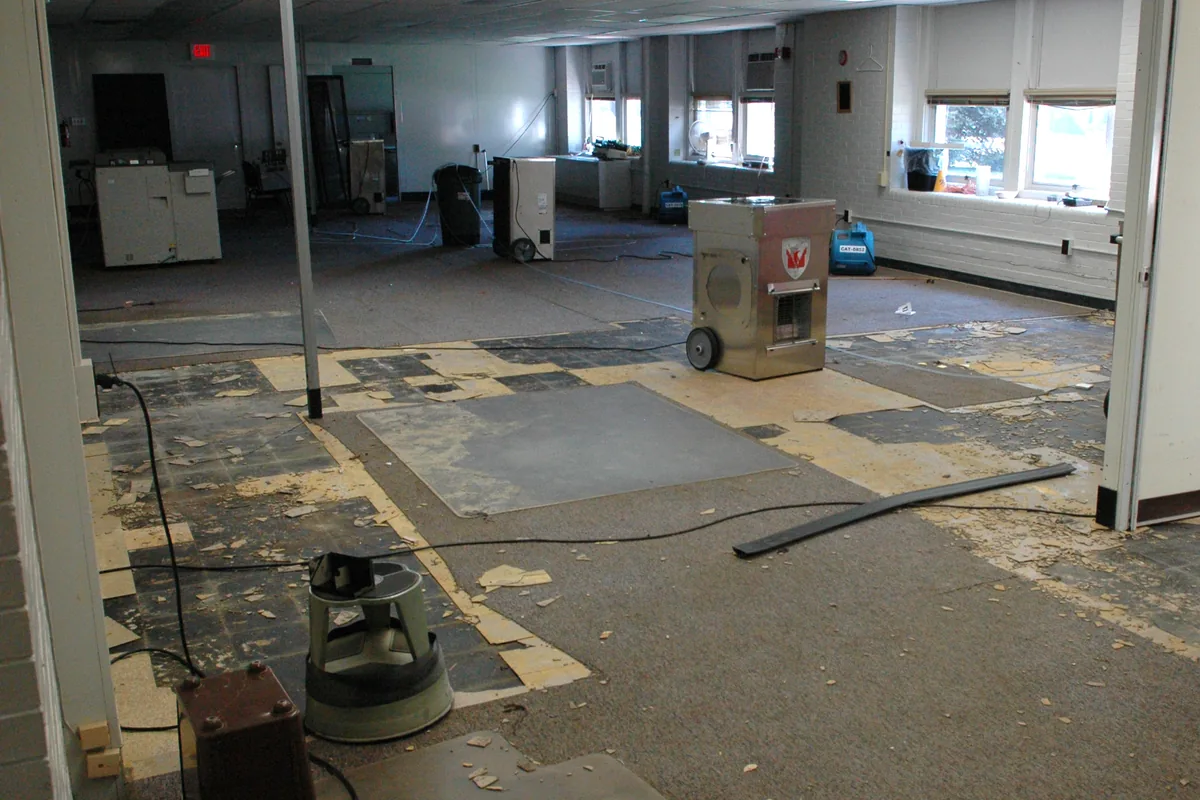
A supply-line leak creates at least three separate scopes. Source repair means fixing the line, valve, or fitting that failed. Cleanup means extracting water and drying the affected materials. Reconstruction means replacing flooring, underlayment, or subfloor as needed. These are different trades and different line items.
When you request quotes, ask each provider which scopes they handle and which they exclude. A plumber may fix the source but not dry the floor. A restoration provider may extract and dry but not replace laminate. A flooring contractor may replace planks but not address hidden moisture. Knowing the boundaries helps you compare quotes fairly.
04 / PLAN YOUR CLEANUP
Extraction and drying are not the same as reconstruction
Extraction removes standing water. Drying reduces moisture in materials. Reconstruction restores what was removed or damaged. A quote for drying does not usually include new flooring, and a quote for flooring does not usually include moisture testing or drying equipment. Ask for both scopes when the subfloor may be wet.
The EPA's flooded homes guidance emphasizes cleaning and drying to reduce moisture problems, but it does not replace a site-specific assessment. If the laminate is lifted, the core may already be compromised. Drying can help the subfloor, but it will not un-swell a damaged laminate core.
05 / PLAN YOUR CLEANUP
A simple worksheet for quote calls
Before you call, write down four things: the laminate brand and SKU if known, the subfloor type, the affected square footage, and whether the leak is stopped. Then ask each provider the same questions so you can compare answers.
- Do you handle source repair, drying, or flooring replacement, and which of those are excluded?
- Will you test the subfloor for moisture before new flooring goes down?
- Is the replacement laminate available in the same product and dye lot?
- Does the quote separate extraction, drying, removal, and installation?
- What is the expected sequence if the subfloor needs more drying time?
- Are there any conditions that would change the scope after work begins?
06 / PLAN YOUR CLEANUP
When replacement is more realistic than repair
Targeted plank replacement can work when the product is available, the damage is limited, and the subfloor is dry. Broader replacement is more likely when the laminate core has swelled across multiple planks, the subfloor stayed wet, or the product is discontinued. A qualified flooring professional can assess whether the seams can be repaired without creating a visible mismatch or a new moisture trap.
If the affected area is small and the leak was caught quickly, you may be able to dry the surface and monitor. If the seams stay lifted or the floor feels soft, that is a sign the moisture went deeper. In that case, ask for a moisture assessment before committing to new flooring.
07 / PLAN YOUR CLEANUP
What to avoid while you gather quotes
Do not ignore electrical hazards. Do not assume a lifted seam is only a surface problem. Do not accept a bundled quote without asking what is included. And do not delay reasonable mitigation if water is still present. Small actions now can limit the scope later.
This article is a decision aid, not a substitute for an on-site evaluation. Product identification and subfloor type are the two facts that most change the repair path. Get those first, then request quotes that separate source repair, drying, and reconstruction.
YOUR WRITTEN-SCOPE CHECKLIST
Turn the conversation into clear answers.
Check an item when you understand how it is addressed in the written scope. These checks organize your questions; they do not certify the condition of a property.
CHECK A WRITTEN ESTIMATE
What do the listed charges add up to?
Enter amounts from an estimate you already have. This adds your figures; it does not predict restoration prices. Blank fields count as zero, so confirm missing charges with the provider.
Only the amounts entered are included. Taxes, rebuilding, source repair and changes may be additional.
FREE QUOTE-PREPARATION TOOL
Know what to say when you call.
Build a short description using what you already know. Your notes stay on this page; this does not send a request or book service.
Your call notes
Questions to ask: Before requesting quotes, identify the laminate product and subfloor. That determines whether drying, targeted plank replacement, or broader removal is realistic, Do you serve my address? What assessment fees apply, and what is excluded?
Common questions
Can lifted laminate seams be repaired without replacing the floor?
Sometimes individual planks can be replaced if the product is available and the subfloor is dry. But if the core has swelled or the subfloor stayed wet, matching replacement may not restore a flat, stable surface.
Does a supply-line leak require professional drying?
It depends on how long water was present, how far it spread, and what materials are underneath. If the leak was slow and caught quickly, limited drying may be enough. If water reached the subfloor or wall cavities, professional drying evaluation is reasonable.
Should I call my insurance before getting quotes?
Many policies require prompt notice, but coverage depends on your specific policy and the cause. Keep documentation and ask your insurer what they need. This article does not interpret your policy or guarantee coverage.
What should a quote include for this type of leak?
Ask for separate line items for source repair, water extraction and drying, flooring removal, subfloor drying or repair, and replacement. A quote that bundles everything makes it hard to compare scope or know what is excluded.
YOUR NEXT STEP
A clearer conversation.
A more useful quote.
Have your ZIP code and property details ready. Confirm address coverage, fees and the proposed scope before booking.
Call for Quote · (833) 628-1561 ↗Houston Water Recovery connects callers with independent providers. Availability, qualifications, work and pricing are confirmed by the provider.
Sources & further reading
This guide explains public guidance and questions to ask. It is not a property assessment or a documented customer case, and no technician review is claimed.
CDC: Electrical hazards after flooding ↗EPA: Flooded homes cleanup guidance ↗