
THE QUICK ANSWER
What should you know first?
A plumber's repair stops the known leak but does not establish that adjoining drywall, trim or flooring is dry. If it is safe to approach, document what is visibly affected and ask a restoration provider how they will assess the water path, identify any material access or removal, and verify drying. Keep the repair invoice separate from the cleanup estimate; do not enter standing water near electrical equipment or open a wall yourself.
Prepare your questions ↓AT A GLANCE
The decisions behind the quote.
Source repair
Keep the repair date, invoice and known leak location together.
Moisture assessment
Ask which visible and concealed areas the provider will check.
Drying scope
Identify equipment, monitoring, material decisions and exclusions.
Repair handoff
Ask who confirms readiness before the wall is closed or refinished.
01 / PLAN YOUR CLEANUP
What the completed plumbing repair does—and does not—tell you
A repair invoice identifies the plumbing work performed. It may say little about the condition of adjacent finishes. Record the repair date, the known source and the rooms visibly affected. Ask the plumber whether the source has been tested and whether further leaks were observed; ask the restoration provider to assess the building materials. Neither a dry-looking paint surface nor an assumed leak start date establishes how far water traveled.
02 / PLAN YOUR CLEANUP
Ask for a moisture map, not a promise to replace every wall
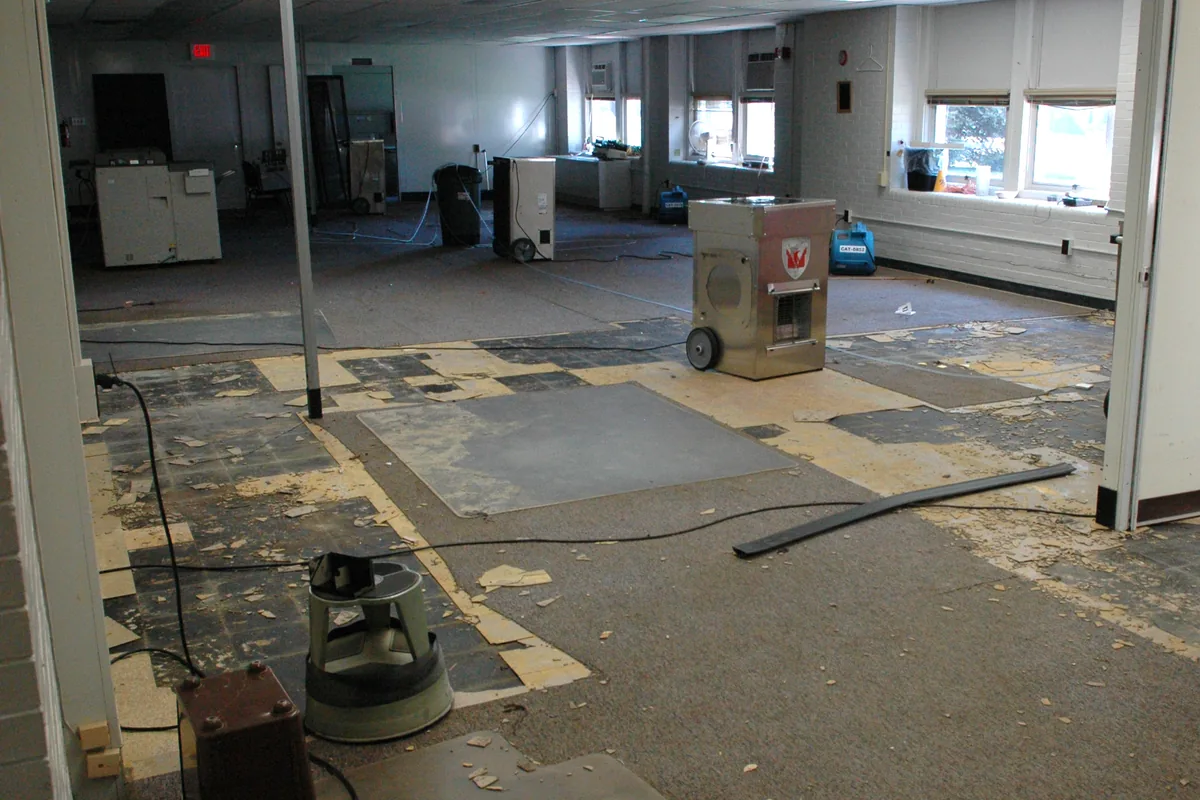
The useful first question is which surfaces and adjoining areas will be checked. At the visit, ask how a professional will evaluate the wall base, flooring edge and, where appropriate, concealed spaces without assuming every finish must be opened. Ask the provider to explain readings or other observations, access limits and why a material can remain, be dried or needs removal. EPA highlights hidden areas behind walls and ceilings as places that can stay wet.
03 / PLAN YOUR CLEANUP
What belongs in the written drying scope?
Request separate lines for assessment, any water extraction, access or removal, equipment, monitoring visits, disposal and finish repairs. Have the provider name who handles plumbing, electrical work and reconstruction. If equipment is billed by day, ask for each rate, the planned review point and written approval before extra days or additional removal. A restoration quote is a proposed scope, not a finding that insurance will pay for it.
04 / PLAN YOUR CLEANUP
Use the source and elapsed time as questions, not diagnoses
Tell the provider whether water was from a known supply line, a drain or an uncertain source, and when you first noticed it. Do not infer that clean-looking water remains clean after passing through building materials. EPA advises prompt moisture control and notes that porous materials can be difficult to restore after mold develops. If sewage or other contamination may be involved, say so before anyone assumes an ordinary drying scope; contaminated-water cleanup requires an appropriately experienced professional.
05 / PLAN YOUR CLEANUP
A useful call summary
Give the property ZIP, repaired source if known, visible wall or floor changes, any affected room below, photos taken safely, and access or electrical concerns. Ask whether service is available at this address and what a site assessment includes. Save the repair invoice, the proposed cleanup scope and any later change orders together. For costs, compare what is included rather than a generic per-room price; no Houston-specific price or completion time is promised here.
Read the burst-pipe service explanation and the drying guide for the next questions. Houston Water Recovery connects callers with independent providers; a provider must confirm availability, qualifications, scope and price. The displayed quote number is for a cleanup conversation, not a plumbing or electrical emergency line.
YOUR WRITTEN-SCOPE CHECKLIST
Turn the conversation into clear answers.
Check an item when you understand how it is addressed in the written scope. These checks organize your questions; they do not certify the condition of a property.
CHECK A WRITTEN ESTIMATE
What do the listed charges add up to?
Enter amounts from an estimate you already have. This adds your figures; it does not predict restoration prices. Blank fields count as zero, so confirm missing charges with the provider.
Only the amounts entered are included. Taxes, rebuilding, source repair and changes may be additional.
FREE QUOTE-PREPARATION TOOL
Know what to say when you call.
Build a short description using what you already know. Your notes stay on this page; this does not send a request or book service.
Your call notes
Questions to ask: What evidence will show the affected wall and adjoining materials are ready for repairs? Do you serve my address? What assessment fees apply, and what is excluded?
Common questions
Does dry-looking paint mean the wall is dry?
Appearance alone cannot establish the condition of concealed materials. Ask what the provider checked and which readings or observations support the drying decision.
Does every wet wall have to be opened?
Ask the provider to explain the material condition, access limits and evidence for drying in place or removal. A remote article cannot decide that for your home.
Should I combine the plumbing and restoration quotes?
Keep the scopes identifiable even if one company coordinates them. Confirm what each quote includes, what is excluded and how additional work is approved.
YOUR NEXT STEP
A clearer conversation.
A more useful quote.
Have your ZIP code and property details ready. Confirm address coverage, fees and the proposed scope before booking.
Call for Quote · (833) 628-1561 ↗Houston Water Recovery connects callers with independent providers. Availability, qualifications, work and pricing are confirmed by the provider.
Sources & further reading
This guide explains public guidance and questions to ask. It is not a property assessment or a documented customer case, and no technician review is claimed.
EPA: Mold Course, Prevention and Hidden Areas ↗EPA: Mold Cleanup in Your Home ↗CDC: Reentering Your Flooded Home Safely ↗