

THE QUICK ANSWER
What should you know first?
If a refrigerator water line leaks, the visible puddle is only part of the story. Before repairs, ask whether moisture traveled under cabinets, into flooring layers, or behind walls. Shut off the supply only if it is safe to reach, then document conditions, separate the appliance repair from water-damage assessment, and request a written scope that addresses hidden moisture and material condition.
Prepare your questions ↓AT A GLANCE
The decisions behind the quote.
Stop the source
Shut off the supply only if the valve is safe to reach; arrange appliance or plumbing repair separately.
Look beyond the puddle
Ask what will be checked under cabinets, behind walls and within flooring layers.
Compare drying scopes
Request material findings, equipment and monitoring details, written exclusions, and a change-approval process.
Keep a record
Save safe photographs, repair receipts and the written scope for later questions.
01 / PLAN YOUR CLEANUP
The First Question: Is the Floor Dry or Just Dry-Looking?
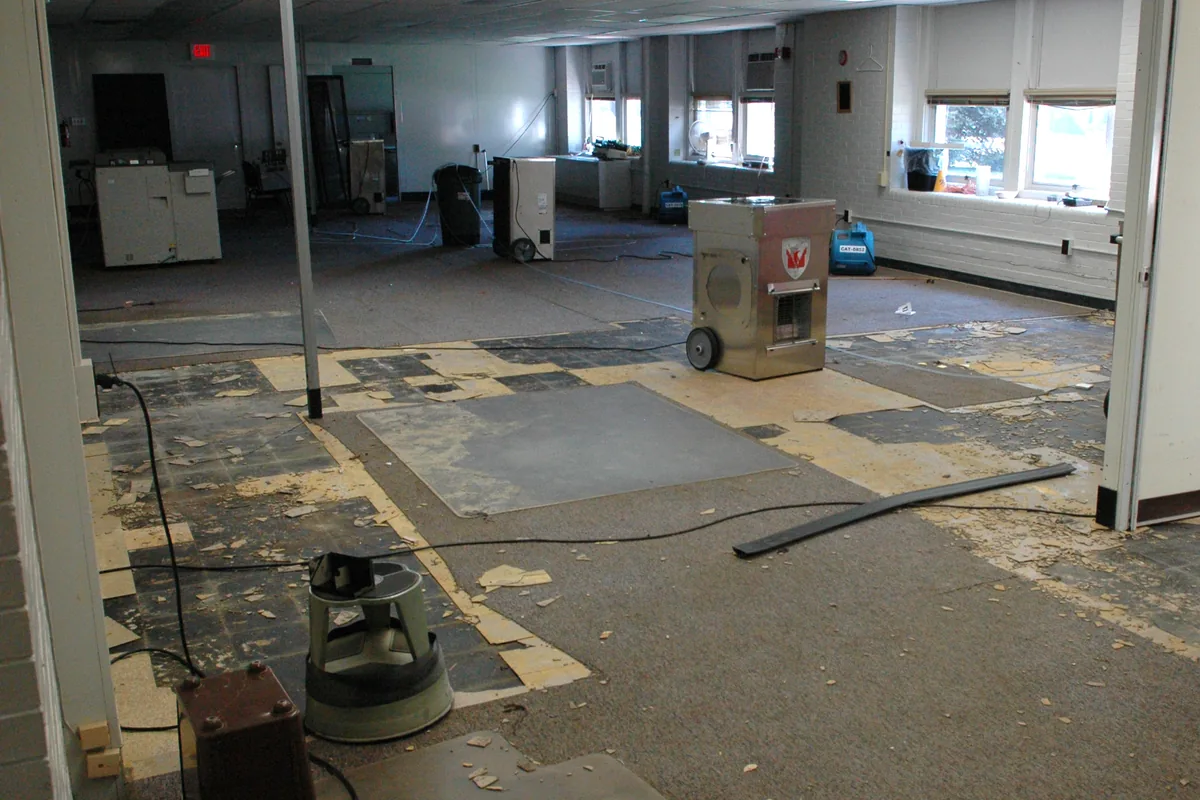
A refrigerator water-line leak often announces itself as a small puddle near the ice maker or behind the fridge. After mopping, the floor may look normal. But surface appearance alone is insufficient to judge whether materials are dry, according to EPA guidance on clean-water damage. The real question is whether moisture moved under the cabinet, into the flooring layers, or along the wall behind the refrigerator.
In any home, cabinets and flooring can conceal damp areas. Water can spread beyond the visible puddle. Before scheduling repairs, ask what will be checked beyond the visible floor.
02 / PLAN YOUR CLEANUP
Quick Answer: What to Do After a Refrigerator Line Leak
- Shut off the water supply only if the valve is safe to reach and operate; do not touch electrical equipment that may have been exposed to water.
- Move the refrigerator forward only if it can be done safely and without damaging the supply line further.
- Photograph the area, including the line, the floor, and any nearby cabinets or walls.
- Separate the appliance repair from the water-damage assessment; a technician who fixes the line may not evaluate hidden moisture.
- Ask for a written scope that states what will be inspected, what materials will be checked, and how drying will be monitored.
- Keep receipts and records; Texas Department of Insurance guidance notes that photographs, receipts, and repair records help document a loss.
03 / PLAN YOUR CLEANUP
Leak Source and Shutoff: Safety First
The supply line behind a refrigerator can leak at the valve, the connection, or along the tubing. If you can safely reach the shutoff valve, turning it off may stop additional water from entering the area. But if the valve is behind the refrigerator, near exposed wiring, or in a tight cabinet, do not force it. Water-exposed electrical equipment needs qualified evaluation before power is restored, according to ESFI guidance.
Do not attempt electrical repair or pull the refrigerator across a wet floor if that risks tipping or damaging the line. The priority is stopping the source only when it is safe, then documenting what you see.
04 / PLAN YOUR CLEANUP
Hidden Moisture: Under Cabinets, Flooring, and Walls
EPA moisture guidance notes that hidden moisture can occur around pipes and behind building surfaces. A refrigerator line runs behind the appliance and often through a cabinet or wall. Water can travel under vinyl, tile, or wood flooring and into the subfloor or cabinet toe-kick. Carpet backing and padding also need drying, according to EPA guidance, which is relevant if the leak reached an adjacent room.
Moisture meters can identify wet materials and monitor their drying, per EPA guidance. Ask whether the assessment will include these tools and whether cabinet bases, flooring layers, and wall cavities will be checked. Without that step, a dry-looking floor can hide ongoing moisture.
05 / PLAN YOUR CLEANUP
Appliance Repair vs. Water-Damage Assessment
Fixing the refrigerator line and assessing water damage are separate tasks. An appliance technician may replace the supply line or valve, but that does not confirm that flooring, cabinets, or wall materials are dry. EPA guidance distinguishes wallboard, insulation, and flooring, noting that material condition and underlying moisture affect drying or replacement decisions.
Ask each provider what they will and will not evaluate. If the appliance repair is completed first, the water-damage assessment should still document what was wet and what was checked. This separation helps avoid assuming the problem is solved because the drip stopped.
06 / PLAN YOUR CLEANUP
Material Assessment: What Can Be Dried and What May Need Replacement
Not all materials respond the same way to a refrigerator line leak. EPA guidance on clean-water damage explains that wallboard, insulation, and flooring must be evaluated individually. Carpet backing and padding also need drying, per EPA moisture investigation guidance. Surface appearance alone is insufficient to decide whether a material can be dried or should be replaced.
Ask the assessor to describe the condition of each affected material: flooring, subfloor, cabinet base, wallboard, insulation, and any carpet or padding. The written scope should state which materials will be dried, which will be monitored, and which may need replacement if they do not dry properly.
07 / PLAN YOUR CLEANUP
Documentation: What to Record Before and After
Texas Department of Insurance guidance notes that photographs, receipts, and repair records help document a loss. Start by photographing the supply line, the floor, the cabinet area, and any visible moisture. Keep receipts for any emergency supplies or repairs. If you contact your insurer, ask about claim-specific requirements rather than assuming what is covered.
Coverage depends on cause and policy; sudden water damage, ongoing leaks, and flooding are treated differently, according to TDI guidance. Documentation does not guarantee an outcome, but it creates a clearer record of what happened and what was done.
08 / PLAN YOUR CLEANUP
Written Quote Scope: What to Compare
A written quote for water-damage assessment or drying should state what will be inspected, what equipment will be used, and how drying will be monitored. The IICRC public overview includes inspections, drying technology, documentation, and structural restoration as part of the process. Use that as a checklist, not as a certification claim about any provider.
- Does the scope include hidden areas such as under cabinets, behind the refrigerator, and within flooring layers?
- Will moisture meters be used to identify wet materials and monitor drying?
- Are material conditions described for wallboard, insulation, flooring, and carpet or padding?
- Is documentation included, such as photos and moisture readings?
- Does the quote separate appliance repair from water-damage work?
- Are any exclusions or assumptions stated in writing?
09 / PLAN YOUR CLEANUP
Houston Address, ZIP, and Access Planning
When requesting a written quote in Houston, provide the address and ZIP so the provider can plan access. Ask whether the refrigerator will need to be moved, whether cabinet contents must be cleared, and whether parking or building access affects the visit. These are planning questions, not eligibility claims.
If the kitchen is in a condo or apartment, ask about building rules for equipment or after-hours work. The goal is to avoid delays and to make sure the assessment can reach the hidden areas behind and under the refrigerator.
10 / PLAN YOUR CLEANUP
Estimate Terms: What to Clarify Before Approving Work
Ask how the estimate is structured: is it a flat fee, an hourly rate, or a per-day rate? Does it include monitoring visits, equipment, and documentation? Are there separate charges for moving the refrigerator or for accessing cabinets? The written quote should state what is included and what is not.
Do not rely on a verbal estimate. If the scope changes after hidden moisture is found, ask for a revised written scope before additional work begins. This keeps the decision tied to what is actually wet, not to a guess based on the visible puddle.
11 / PLAN YOUR CLEANUP
Plan the next step for your Houston address
Use the checklist and call-note tool to compare written scopes. Confirm the provider serves your exact address, ask about assessment fees, and keep the appliance repair separate from drying and later repairs. Availability, scope and pricing must be confirmed for the property.
YOUR WRITTEN-SCOPE CHECKLIST
Turn the conversation into clear answers.
Check an item when you understand how it is addressed in the written scope. These checks organize your questions; they do not certify the condition of a property.
CHECK A WRITTEN ESTIMATE
What do the listed charges add up to?
Enter amounts from an estimate you already have. This adds your figures; it does not predict restoration prices. Blank fields count as zero, so confirm missing charges with the provider.
Only the amounts entered are included. Taxes, rebuilding, source repair and changes may be additional.
FREE QUOTE-PREPARATION TOOL
Know what to say when you call.
Build a short description using what you already know. Your notes stay on this page; this does not send a request or book service.
Your call notes
Questions to ask: Does the written scope check hidden areas and explain how drying will be monitored? Do you serve my address? What assessment fees apply, and what is excluded?
Common questions
Can a dry-looking floor still need an assessment?
Yes. EPA guidance says hidden damp areas may occur behind surfaces and under flooring. Ask what areas and materials an assessor would check.
Does a new supply line finish the cleanup?
Repairing the appliance line stops the source, but it does not show whether surrounding cabinets, flooring or wall materials are dry.
Will insurance cover a refrigerator leak?
It depends on your policy and what caused the loss. Texas Department of Insurance guidance distinguishes sudden accidental damage, gradual leaks and flooding. Ask your insurer about your own claim.
What information helps with a written quote?
Have the address and ZIP, when you noticed the leak, whether it is stopped, safe photographs, affected rooms and any appliance repair records ready.
YOUR NEXT STEP
A clearer conversation.
A more useful quote.
Have your ZIP code and property details ready. Confirm address coverage, fees and the proposed scope before booking.
Call for Quote · (833) 628-1561 ↗Houston Water Recovery connects callers with independent providers. Availability, qualifications, work and pricing are confirmed by the provider.
Sources & further reading
This guide explains public guidance and questions to ask. It is not a property assessment or a documented customer case, and no technician review is claimed.
EPA: water-damaged materials ↗EPA: finding moisture ↗ESFI: water-damaged electrical equipment ↗TDI: help after a storm ↗TDI: water damage insurance coverage ↗IICRC: S500 overview ↗