

THE QUICK ANSWER
What should you know first?
When a sliding patio door lets water reach the flooring, treat it as two connected jobs: the door and threshold assembly that allowed entry, and the flooring assembly that absorbed it. Stop the source if you can do so safely, keep people away from wet electrical areas, and begin reasonable mitigation such as removing standing water and lifting wet items. Then get the threshold and weatherproofing repair quoted separately from extraction, drying, and any flooring reconstruction, because those scopes are usually performed by different trades and priced on different terms.
Prepare your questions ↓AT A GLANCE
The decisions behind the quote.
Source repair scope
Covers the sliding panel, track, threshold, sill pan, flashing, sealants, and exterior drainage details that let water cross the opening. This is a door and weatherproofing trade scope.
Cleanup and drying scope
Covers water removal, moisture mapping, air movement, dehumidification, and daily readings. This is a mitigation scope and is usually documented separately from the door repair.
Reconstruction scope
Covers flooring, subfloor, trim, and finish repairs after drying targets are met. It is often a third scope and should not be folded into the drying quote without line items.
01 / PLAN YOUR CLEANUP
Start with the two-boundary view
A sliding patio door leak that reaches flooring has crossed an exterior boundary and an interior one. The exterior boundary is the door panel, track, threshold, sill pan, flashing, sealant, and drainage path. The interior boundary is the flooring, subfloor, trim, and wall base that absorbed the water. Treating these as one problem often produces one vague quote that neither trade fully owns.
Your first practical step is to decide which boundary failed and which one is wet. If water appears only during wind-driven rain and tracks from the door inward, the entry path is likely at the threshold or weatherproofing. If water appears under the flooring away from the door, the path may be less obvious and deserves closer inspection. Either way, the repair and the cleanup are separate scopes.
02 / PLAN YOUR CLEANUP
A scope comparison worksheet
Use this worksheet to sort what you are buying. It is not a price list and it does not replace an on-site evaluation. Its purpose is to keep the door repair, the drying work, and the finish reconstruction from being blended into a single number you cannot audit.
- Source repair: sliding panel adjustment, track cleaning, threshold and sill pan condition, flashing, sealants, weep openings, and exterior drainage at the sill.
- Extraction and drying: standing water removal, moisture mapping, air movers, dehumidification, daily readings, and a stated drying goal.
- Reconstruction: flooring replacement or refinishing, subfloor repair, trim, baseboard, paint, and any wall base repairs after drying is confirmed.
- Verification: who takes final moisture readings, what values are recorded, and who signs off before reconstruction starts.
- Exclusions: what each trade will not touch, such as exterior grading, irrigation, siding, or interior finish work.
If a provider will not separate these items, ask them to explain how the quote accounts for each. A written scope with line items is easier to compare than a single lump sum, and it makes handoffs between trades clearer.
03 / PLAN YOUR CLEANUP
What to do in the first hours
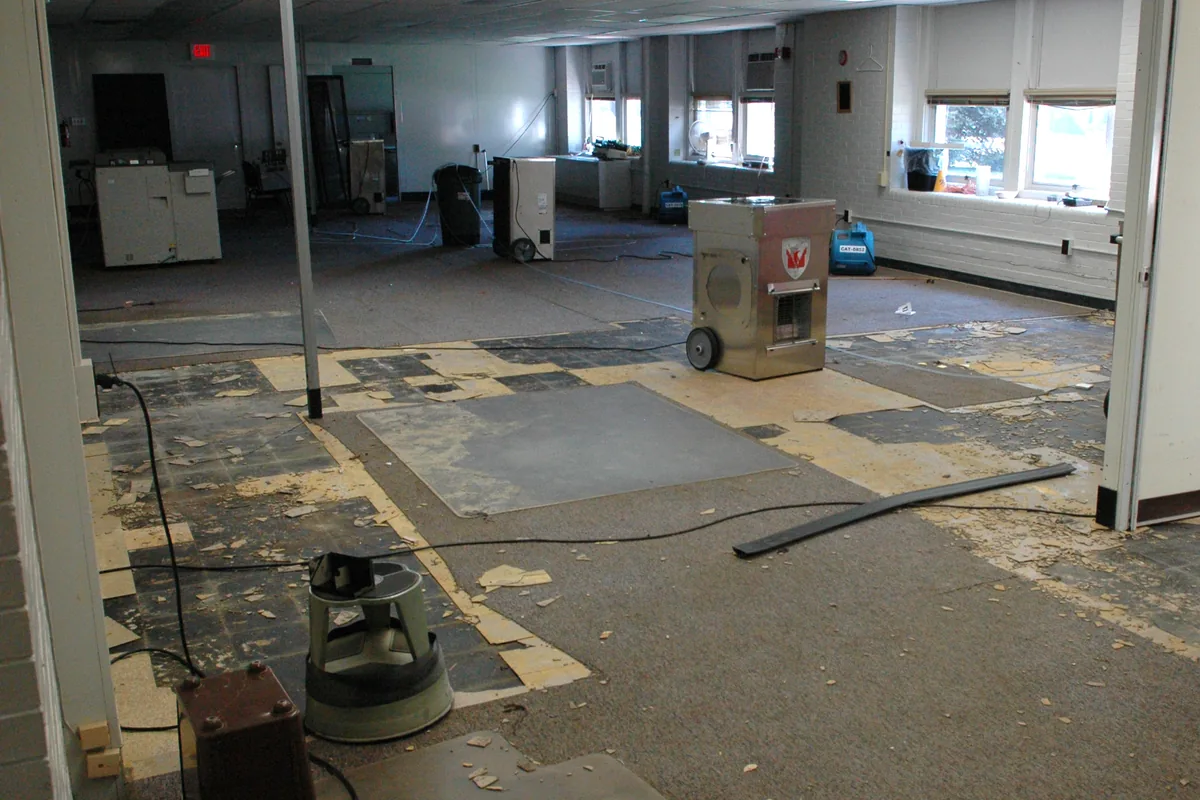
Prompt safe action limits how far water spreads. Keep people away from wet electrical areas, cords, and equipment, and shut off power to affected areas if it can be done safely. The CDC advises treating flooded areas as electrically hazardous until you know otherwise. If you are unsure, wait for qualified help rather than reaching into water near outlets or appliances.
Where it is safe, remove standing water with towels or a wet vacuum, lift rugs and movable items off the flooring, and place a fan to move air. Do not delay reasonable mitigation while waiting for a quote, but do not attempt repairs that require opening the door assembly or working near electrical components unless you are qualified to do so.
04 / PLAN YOUR CLEANUP
Why drying and reconstruction are not the same scope
Drying aims to return the wet assembly to a documented moisture condition. Reconstruction replaces or refinishes materials that were damaged or removed. A drying quote may include equipment placement and monitoring, while a reconstruction quote may include flooring, subfloor, trim, and paint. Mixing them can hide whether the assembly was verified dry before new materials were installed.
Ask who confirms dryness and what readings are recorded. If flooring is reinstalled before the subfloor is dry, the new floor can trap moisture. A clear handoff between the drying scope and the reconstruction scope protects both the repair and the finish.
05 / PLAN YOUR CLEANUP
Preparing your quote call
Before you call, gather photos of the door track, threshold, interior flooring edge, and any exterior drainage path. Note when water was first observed and whether it followed rain, irrigation, or another event. Write down what you have already done, such as removing standing water or lifting items.
Then ask each provider to describe their scope in plain terms. For the door and weatherproofing side, ask whether the threshold, sill pan, flashing, and sealants are included. For the mitigation side, ask whether extraction, drying equipment, moisture readings, and daily monitoring are included. For reconstruction, ask what materials and finishes are covered and who confirms the assembly is dry first.
Keep the answers in one folder. If a provider gives a range rather than a fixed number, ask what conditions would move the quote up or down. That is more useful than a single figure that changes after work begins.
06 / PLAN YOUR CLEANUP
Handoff details that prevent repeat wetting
The handoff between the door repair and the interior work is where repeat wetting is often missed. If the threshold or weatherproofing is not corrected, the same flooring edge can get wet again. If the flooring is reinstalled before the subfloor is dry, moisture can be trapped. Ask both trades to confirm the sequence: source repair, drying verification, then reconstruction.
Exterior drainage at the sill also matters. Water that pools against the door can find its way back in. Ask whether the exterior drainage path is part of the door scope or a separate landscape or drainage scope, and get that in writing.
07 / PLAN YOUR CLEANUP
When to call a qualified professional
Call a qualified professional for electrical concerns, contaminated water, large areas of standing water, or any structural question you cannot answer confidently. The EPA's flooded homes guidance is a useful background reference for cleanup sequencing and safety. You can still take safe steps such as keeping people away from wet electrical areas and moving movable items while you arrange help.
For the drying portion of the work, see our Structural Drying guide to understand how moisture readings and drying goals are typically documented. Use it to ask better questions, not as a substitute for an on-site evaluation.
YOUR WRITTEN-SCOPE CHECKLIST
Turn the conversation into clear answers.
Check an item when you understand how it is addressed in the written scope. These checks organize your questions; they do not certify the condition of a property.
CHECK A WRITTEN ESTIMATE
What do the listed charges add up to?
Enter amounts from an estimate you already have. This adds your figures; it does not predict restoration prices. Blank fields count as zero, so confirm missing charges with the provider.
Only the amounts entered are included. Taxes, rebuilding, source repair and changes may be additional.
FREE QUOTE-PREPARATION TOOL
Know what to say when you call.
Build a short description using what you already know. Your notes stay on this page; this does not send a request or book service.
Your call notes
Questions to ask: Separate the threshold and weatherproofing repair from extraction, drying, and flooring reconstruction. Ask each trade what they will and will not handle, and keep a written scope before work begins. Do you serve my address? What assessment fees apply, and what is excluded?
Common questions
Is the sliding door repair part of the water cleanup quote?
Usually not. Door and threshold repair is a weatherproofing scope, while extraction and drying is a mitigation scope. Ask each provider to put their scope in writing so you can see where one ends and the other begins.
Can I dry the flooring before fixing the door?
You can begin reasonable mitigation while arranging the door repair, but drying alone does not correct the entry path. If the threshold or weatherproofing is not repaired, the same area can get wet again in the next wind-driven rain.
What should I ask before signing a drying quote?
Ask what equipment will be used, how moisture readings will be recorded, what the drying goal is, who confirms it, and whether flooring reconstruction is included or separate. Request line items rather than a single lump sum.
When should I call a qualified professional instead of handling it myself?
Call for electrical concerns, contaminated water, large areas of standing water, or any structural question you cannot answer confidently. You can still take safe steps such as keeping people away from wet electrical areas and moving movable items.
YOUR NEXT STEP
A clearer conversation.
A more useful quote.
Have your ZIP code and property details ready. Confirm address coverage, fees and the proposed scope before booking.
Call for Quote · (833) 628-1561 ↗Houston Water Recovery connects callers with independent providers. Availability, qualifications, work and pricing are confirmed by the provider.
Sources & further reading
This guide explains public guidance and questions to ask. It is not a property assessment or a documented customer case, and no technician review is claimed.
CDC: Electrical hazards after flooding ↗EPA: Flooded homes cleanup guidance ↗