

THE QUICK ANSWER
What should you know first?
Start by treating the overflow as two connected zones: the room above where the sink overflowed and the hallway ceiling below where water showed up. Stop the source if it is safe to do so, keep people away from sagging ceilings, light fixtures, and any electrical equipment, and call a qualified restoration provider to assess both zones. The provider should separate source repair from cleanup, extraction and drying from reconstruction, and quote scope from final cost. Use the map below to organize what you observed before you call.
Prepare your questions ↓AT A GLANCE
The decisions behind the quote.
Room above: source and floor
Check the sink supply line, drain, and cabinet base. Water can pool under the cabinet, soak the floor covering, and travel through the floor assembly before it shows below.
Hallway below: ceiling and walls
Look for staining, bubbling paint, sagging drywall, or a soft spot. Water may also run along ceiling joists and appear at a wall or trim away from the original stain.
Scope vs. final cost
A quote should list what will be dried, removed, repaired, or rebuilt. Ask whether the written price is fixed for a defined scope or an estimate, and how any added work would be approved.
01 / PLAN YOUR CLEANUP
Start with the room above, not the ceiling stain
When an upstairs sink overflow reaches a hallway ceiling, the visible stain is a symptom, not the source. The room above usually holds the origin: a supply line, a drain connection, or an overflowing basin. Water can pool inside the cabinet, soak the floor covering, and enter the floor assembly. From there it may travel along joists and show up in the hallway ceiling, sometimes several feet from the sink.
Before calling, note what you can see safely in the room above: is the cabinet floor wet, is the baseboard stained, does the floor feel soft, and is there any standing water? These details help a provider plan where to inspect and what equipment may be needed. Do not pull up flooring or open a ceiling yourself if it could disturb electrical wiring or create a structural risk.
02 / PLAN YOUR CLEANUP
Then map the hallway below
The hallway below is the second zone. Look for ceiling stains, bubbling paint, sagging drywall, or a soft spot. Water may also run along ceiling joists and appear at a wall, trim, or light fixture. Keep people away from sagging ceilings and ceiling fixtures, and do not touch electrical switches or devices if water is present or the area is wet. The CDC advises avoiding electrical hazards after flooding; the same caution applies to any water intrusion near wiring.
- Ceiling: stain size, color, and whether it is spreading.
- Ceiling surface: flat, bubbling, sagging, or soft.
- Walls: staining, swelling, or peeling near the ceiling line.
- Floor below: any dampness, warping, or water tracking.
- Fixtures: ceiling lights, switches, or outlets near the wet area.
- Adjacent rooms: closets or rooms that share the same ceiling cavity.
03 / PLAN YOUR CLEANUP
Separate source repair from cleanup
Source repair means fixing the sink supply line, drain, or overflow that caused the water. Cleanup means removing water, drying wet materials, and addressing any contamination or debris. These are different scopes and may involve different trades. A restoration provider may handle cleanup and drying, while a plumber or qualified technician handles the sink repair. Ask who is responsible for each part so nothing is left unfinished.
If the water is clean supply-line water and you can stop it quickly, the cleanup may be simpler than if the water has picked up contaminants from the drain or building materials. Do not assume the water category without an assessment. The EPA's flooded homes guidance notes that cleanup should match the type of water and materials involved.
04 / PLAN YOUR CLEANUP
Separate extraction and drying from reconstruction
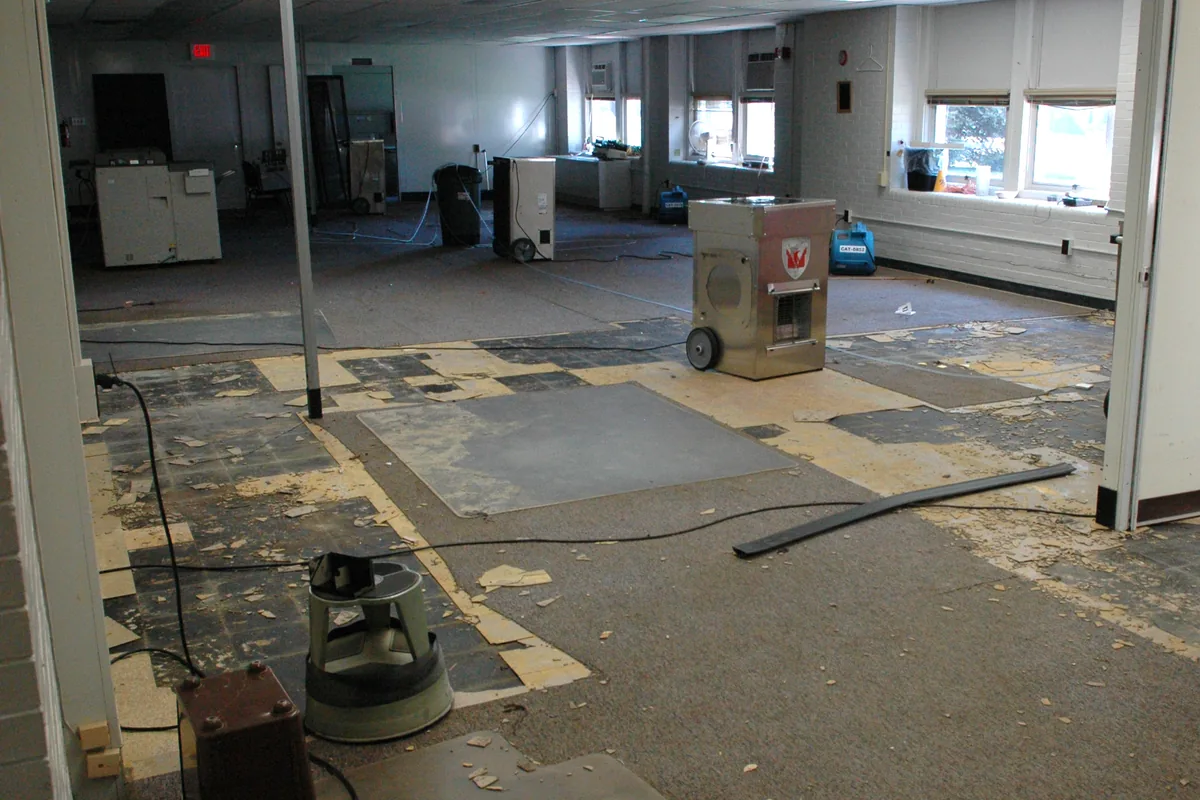
Extraction and drying remove moisture and bring wet materials back to a stable condition. Reconstruction replaces materials that cannot be dried or that were removed to access the wet area, such as drywall, insulation, flooring, or trim. A quote that only covers drying may leave you with a separate bill for rebuilding. A quote that only covers reconstruction may skip the moisture control that prevents future problems.
Ask the provider to explain how they will check hidden moisture in the floor assembly and ceiling cavity. Moisture meters and thermal imaging are common tools, but the important part is that the scope says what will be checked and what will be done with the findings. For a deeper look at drying methods, see the Structural Drying guide.
05 / PLAN YOUR CLEANUP
Quote scope vs. final cost
Ask for written approval before additional work is added. Ask for written approval before additional work is added. That does not mean quotes are meaningless; it means you should compare the scope line by line. Ask each provider to list source repair, extraction, drying, removal, and reconstruction separately, and to state what is excluded.
- What areas will be inspected and dried?
- What equipment will be used, and for how long is it typically needed?
- What materials will be removed versus dried in place?
- Who handles source repair, and is that included?
- What reconstruction is included, and what is excluded?
- How will hidden moisture be checked before repairs close up?
- What could change the scope after work begins?
06 / PLAN YOUR CLEANUP
Prepare for the quote call
Have your notes ready: when you noticed the overflow, what you saw in the room above, what the hallway ceiling looks like now, and whether the ceiling is soft or sagging. Mention any electrical fixtures near the wet area. Ask the provider to inspect both zones and to give you a written scope that separates source repair, cleanup, drying, and reconstruction. If they cannot explain the difference, ask again before you decide.
Prompt safe action matters. Stopping the source and calling a qualified provider early can limit the spread of moisture. Avoid electrical hazards and do not delay reasonable mitigation while you wait for a quote. If the ceiling is sagging or you see water near electrical components, keep people out of the area and contact qualified help.
YOUR WRITTEN-SCOPE CHECKLIST
Turn the conversation into clear answers.
Check an item when you understand how it is addressed in the written scope. These checks organize your questions; they do not certify the condition of a property.
CHECK A WRITTEN ESTIMATE
What do the listed charges add up to?
Enter amounts from an estimate you already have. This adds your figures; it does not predict restoration prices. Blank fields count as zero, so confirm missing charges with the provider.
Only the amounts entered are included. Taxes, rebuilding, source repair and changes may be additional.
FREE QUOTE-PREPARATION TOOL
Know what to say when you call.
Build a short description using what you already know. Your notes stay on this page; this does not send a request or book service.
Your call notes
Questions to ask: Map the room above and the hallway below, stop the source if safe, avoid electrical hazards, and ask for a written scope that separates source repair, cleanup, drying, and reconstruction before you compare quotes. Do you serve my address? What assessment fees apply, and what is excluded?
Common questions
Why did an upstairs sink overflow show up in the hallway ceiling?
Water from an upstairs sink can travel through the cabinet base, floor covering, and floor assembly before it reaches the ceiling below. The hallway ceiling may be the first visible sign, but the wet path often starts in the room above.
Should I repair the sink before calling about the ceiling?
Source repair and water cleanup are separate tasks. If you can safely stop the water at the supply valve, do so, then call a qualified provider to assess both the source area and the wet ceiling. A plumber or qualified technician may be needed for the sink repair itself.
What should a quote include for this kind of overflow?
Ask for a scope that lists source repair, water extraction and drying, any removal of wet materials, and reconstruction separately. Ask for written approval before additional work is added.
Can I just paint over the hallway ceiling stain?
Painting over a stain without checking for moisture can trap water and lead to more damage. A qualified provider should check the ceiling and the floor assembly above before any cosmetic repair.
YOUR NEXT STEP
A clearer conversation.
A more useful quote.
Have your ZIP code and property details ready. Confirm address coverage, fees and the proposed scope before booking.
Call for Quote · (833) 628-1561 ↗Houston Water Recovery connects callers with independent providers. Availability, qualifications, work and pricing are confirmed by the provider.
Sources & further reading
This guide explains public guidance and questions to ask. It is not a property assessment or a documented customer case, and no technician review is claimed.
CDC: Electrical hazards after flooding ↗EPA: Flooded homes cleanup guidance ↗