

THE QUICK ANSWER
What should you know first?
Water around a bathroom vent after rain is usually a roof or vent-path problem, not a plumbing leak. Rain-driven intrusion often tracks along a vent boot, pipe flashing, or ceiling penetration and shows up at the lowest point. Plumbing leaks tend to appear regardless of weather. Your first practical step is to confirm the source, then separate source repair from cleanup and drying.
Prepare your questions ↓AT A GLANCE
The decisions behind the quote.
Rain-timed intrusion
If water appears only during or right after rain, suspect roof covering, vent boot, pipe flashing, or a ceiling penetration. The vent may be the low point where water collects, not the source.
Plumbing-timed leak
If water appears after showers, toilet use, or running the sink, suspect a supply or drain line. Plumbing leaks usually do not wait for rain, though a slow drip can pool and look weather-related.
Repair versus cleanup
Source repair stops the water. Cleanup, extraction, and drying address what is already wet. Reconstruction replaces damaged materials. These are separate scopes and often separate providers.
01 / PLAN YOUR CLEANUP
Start With the Timing, Not the Vent
The vent is a symptom location, not necessarily the source. Rain-driven water often enters at the roof covering, a vent boot, pipe flashing, or a ceiling penetration and then runs along a joist or vent pipe until it drips at the bathroom vent. Plumbing water tends to follow fixture use instead of weather. That single distinction changes who you call first and what you ask them to quote.
02 / PLAN YOUR CLEANUP
Roof and Vent-Path Causes to Check
- Vent boot or pipe flashing cracked, lifted, or poorly sealed at the roof penetration.
- Roof covering damage above the bathroom, including missing shingles or exposed underlayment.
- Exhaust fan duct or roof cap that lets water track back along the duct.
- Attic condensation or a blocked vent path that mimics a roof leak.
- Ceiling penetration around the vent housing where water can pool and drip.
03 / PLAN YOUR CLEANUP
Plumbing Causes That Can Look Weather-Related
A slow supply-line drip or a drain leak above the ceiling can pool and release at the vent, sometimes seeming to appear after rain because humidity or use changed. If water shows up after showers, toilet flushing, or sink use, treat plumbing as the leading candidate. A plumber can pressure-test or inspect the suspect line, while a moisture inspection can map how far the wet area extends.
04 / PLAN YOUR CLEANUP
Repair, Cleanup, and Reconstruction Are Different Scopes
Source repair stops the water. Cleanup, extraction, and drying remove moisture already inside the assembly. Reconstruction replaces materials that cannot be dried or that were removed to access the leak. A quote for one scope is not a quote for the others. Ask each provider to state clearly which scope they cover, what they exclude, and whether their price is an estimate or a fixed scope.
05 / PLAN YOUR CLEANUP
A Simple Scope Comparison Worksheet
- Source repair: who identifies and fixes the roof, vent, or plumbing cause?
- Cleanup and drying: who removes standing water, sets drying equipment, and documents moisture readings?
- Reconstruction: who replaces drywall, insulation, paint, or vent components after drying?
- Quote basis: is the price an estimate, a fixed scope, or time and materials?
- Exclusions: what is explicitly not included, such as attic access, permit work, or matching finishes?
- Sequence: what must happen first, and what work should wait until drying is verified?
06 / PLAN YOUR CLEANUP
What to Do While You Wait
Avoid electrical hazards. Do not stand in water near the vent, switches, or fixtures, and do not reach into a wet ceiling. If water is actively spreading or the ceiling is sagging, keep people clear and contact qualified help. Reasonable mitigation, such as moving belongings away from the drip and documenting conditions, can continue while you arrange the source inspection. For broader flooded-home guidance, see the EPA flooded homes cleanup guidance and the CDC electrical hazards page.
07 / PLAN YOUR CLEANUP
How to Prepare for the Quote Call
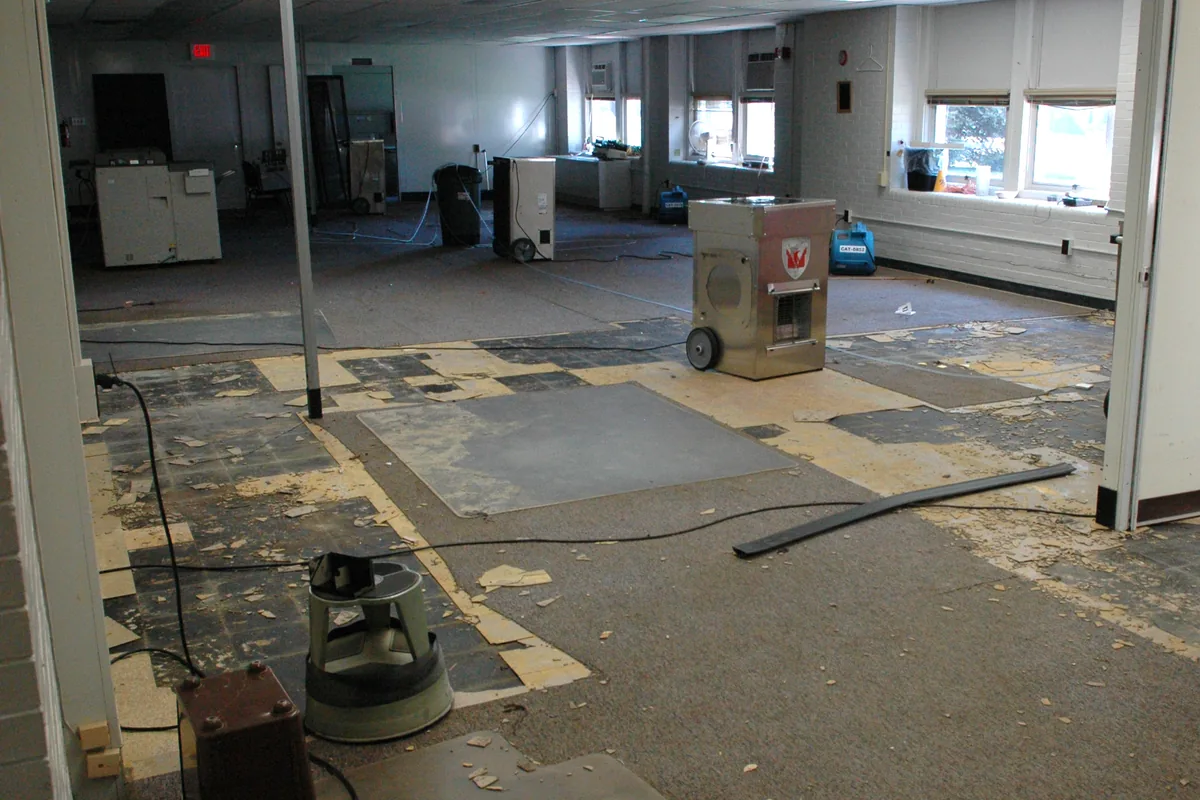
Have your rain-timing notes, photos, and a short description ready. Ask whether the provider handles source repair, cleanup and drying, or reconstruction, and request that scope in writing. If you need cleanup and drying help, start with the Flood Cleanup guide to understand what that scope typically includes, then compare it against any repair quote you receive.
YOUR WRITTEN-SCOPE CHECKLIST
Turn the conversation into clear answers.
Check an item when you understand how it is addressed in the written scope. These checks organize your questions; they do not certify the condition of a property.
CHECK A WRITTEN ESTIMATE
What do the listed charges add up to?
Enter amounts from an estimate you already have. This adds your figures; it does not predict restoration prices. Blank fields count as zero, so confirm missing charges with the provider.
Only the amounts entered are included. Taxes, rebuilding, source repair and changes may be additional.
FREE QUOTE-PREPARATION TOOL
Know what to say when you call.
Build a short description using what you already know. Your notes stay on this page; this does not send a request or book service.
Your call notes
Questions to ask: Use rain timing and a safe visual check to decide whether the roofer or plumber is the first call. Then get cleanup and drying scoped separately from the repair. Do you serve my address? What assessment fees apply, and what is excluded?
Common questions
Does water around a bathroom vent after rain always mean a roof leak?
No. Rain timing makes a roof or vent-path intrusion likely, but water can also travel from a plumbing leak above the ceiling and appear at the vent. A safe visual check and a moisture-focused inspection help separate the two before you commit to a repair scope.
Should I call a roofer or a plumber first?
If the water appears only with rain, a roofer or roof-vent specialist is usually the first call. If it appears after showers or fixture use, start with a plumber. If you cannot tell, ask a qualified inspector to identify the source before authorizing repair work.
Is cleanup covered in the same quote as the roof repair?
Often not. Roof repair, cleanup and drying, and reconstruction are usually separate scopes. Ask each provider to list what they include and what they exclude so you can compare quotes on the same basis.
Can I dry the ceiling myself?
Small surface moisture may air-dry with ventilation, but wet insulation, saturated drywall, or hidden ceiling cavities usually need controlled drying. If the area is larger than a small stain or has been wet for more than a day, have the extent assessed.
YOUR NEXT STEP
A clearer conversation.
A more useful quote.
Have your ZIP code and property details ready. Confirm address coverage, fees and the proposed scope before booking.
Call for Quote · (833) 628-1561 ↗Houston Water Recovery connects callers with independent providers. Availability, qualifications, work and pricing are confirmed by the provider.
Sources & further reading
This guide explains public guidance and questions to ask. It is not a property assessment or a documented customer case, and no technician review is claimed.
CDC: Electrical hazards after flooding ↗EPA: Flooded homes cleanup guidance ↗