

THE QUICK ANSWER
What should you know first?
When water appears at a roof-to-wall junction, treat it as two separate problems: an exterior entry path that needs source repair, and interior wet materials that need cleanup. Start by confirming the path water is using, then scope the interior by affected materials and moisture spread. Get a written scope that separates extraction/drying from reconstruction before discussing final cost.
Prepare your questions ↓AT A GLANCE
The decisions behind the quote.
Source repair vs. cleanup
Source repair addresses why water enters at the roof-to-wall junction. Cleanup addresses wet materials inside. One does not automatically include the other, so confirm which scope a provider is quoting.
Extraction/drying vs. reconstruction
Extraction and drying remove moisture and aim to return materials to a dry state. Reconstruction replaces materials that cannot be dried or were removed. These are different phases with different pricing.
Quote scope vs. final cost
A quote describes what will be done. Ask whether the written price is fixed for a defined scope or an estimate, and how any added work would be approved. Ask how changes are documented and approved.
01 / PLAN YOUR CLEANUP
Start with the entry path, not the stain
The visible wet spot inside is a symptom. The roof-to-wall junction is a common entry path because it joins two different planes and relies on flashing, sealants, and drainage details. Before you plan cleanup, confirm where water is actually entering. If you can safely look from the attic side, check for staining, damp insulation, or daylight around the junction. From outside, look for lifted or damaged flashing, gaps, or debris that holds water. Do not climb onto a wet roof; use binoculars from the ground or ask a qualified professional.
02 / PLAN YOUR CLEANUP
Separate source repair from interior cleanup
Source repair and cleanup are different scopes. Source repair stops water from entering. Cleanup removes moisture and addresses wet materials inside. A roofing contractor may handle the exterior repair, while a water damage or restoration provider handles interior extraction and drying. Some companies offer both, but the quote should still separate them. If you only fix the exterior and leave wet insulation or drywall, moisture can remain and cause further damage. If you only dry the interior and never repair the entry path, the problem can return with the next rain.
03 / PLAN YOUR CLEANUP
Extraction and drying vs. reconstruction
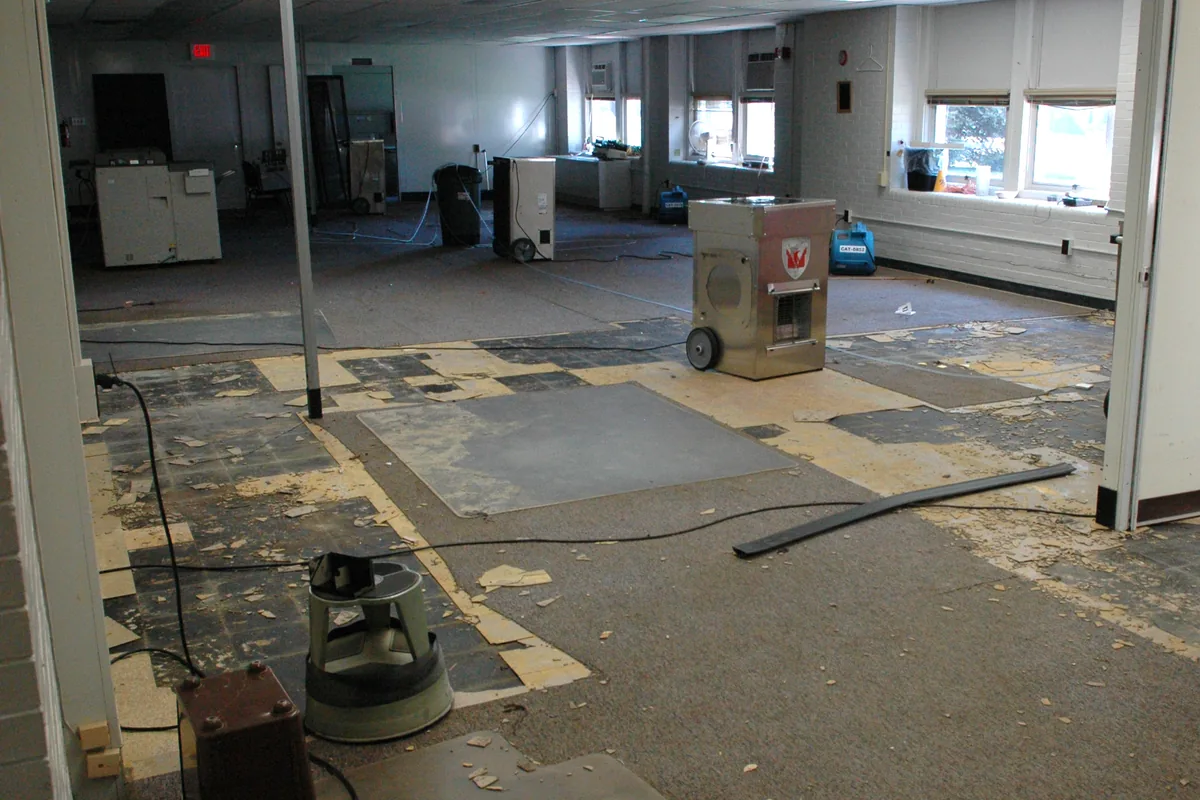
Extraction and drying aim to remove standing water and reduce moisture in materials that can be saved. Reconstruction replaces materials that cannot be dried, were removed, or need repair after drying. These phases are often priced differently. A drying quote may include equipment placement, moisture readings, and monitoring. A reconstruction quote may include drywall, insulation, paint, or trim. Ask which phase each line item belongs to, and whether the provider will document moisture readings before and after drying.
04 / PLAN YOUR CLEANUP
A simple scope comparison worksheet
Use this worksheet to compare quotes. For each provider, note whether they include: (1) source repair at the roof-to-wall junction, (2) interior moisture inspection, (3) extraction if standing water is present, (4) drying equipment and monitoring, (5) removal of unsalvageable materials, (6) reconstruction, and (7) documentation of hidden moisture. If a quote does not mention a category, ask whether it is excluded. This helps you compare like with like instead of comparing a partial scope to a full scope.
- Source repair: flashing, sealant, or drainage correction at the junction.
- Interior inspection: moisture readings in ceiling, wall, and insulation.
- Extraction: removal of standing water if present.
- Drying: air movers, dehumidifiers, and monitoring.
- Material removal: wet drywall, insulation, or trim that cannot be saved.
- Reconstruction: replacement of removed or damaged materials.
- Documentation: photos and moisture readings before, during, and after.
05 / PLAN YOUR CLEANUP
Quote scope is not the same as final cost
A quote describes the work a provider expects to do. Ask for written approval before additional work is added. That is normal in water damage work, but you should know how changes are handled. Ask whether the provider uses a written change order, whether they will pause for approval before additional work, and how they document new findings. Avoid providers who will not put the scope in writing or who refuse to explain what is excluded.
06 / PLAN YOUR CLEANUP
Safety first: electrical and structural caution
Water near ceilings, walls, or fixtures can create electrical hazards. Do not touch wet electrical components, and do not enter a ceiling area that appears sagging or unstable. The CDC advises avoiding electrical hazards after flooding, and the EPA offers guidance on cleaning up flooded homes. If you are unsure whether it is safe, contact qualified help. Reasonable mitigation, such as moving belongings away from the wet area or placing a bucket, can be done if it is safe, but do not delay calling for help when conditions are uncertain.
07 / PLAN YOUR CLEANUP
Prepare for the quote call
Before you call, gather a few details: when you first noticed the water, whether it appears during rain, what materials are wet, and whether you can see the junction from the attic or ground. Take photos if it is safe. Then ask each provider whether they handle source repair, interior cleanup, drying, or reconstruction. If they only handle one part, ask for a referral or a separate quote. The goal is to get a written scope that separates the exterior entry path from the interior work, and extraction/drying from reconstruction.
08 / PLAN YOUR CLEANUP
When to act promptly
Mold and further damage can develop when wet materials stay wet. Prompt action is reasonable: stop the source if you can do so safely, remove standing water with towels or a wet vacuum if there is no electrical hazard, and increase ventilation. If the wet area is larger than a small patch, involves insulation or a wall cavity, or has been wet for more than a day, professional drying is worth considering. Do not delay reasonable mitigation while waiting for a quote.
09 / PLAN YOUR CLEANUP
What to avoid
Avoid assuming the first visible wet spot is the only affected area. Water can travel along framing and appear away from the entry path. Avoid signing a quote that does not separate source repair from cleanup or drying from reconstruction. Avoid accepting a verbal scope without written documentation. And avoid ignoring the exterior entry path once the interior is dry, because the next rain can restart the problem.
10 / PLAN YOUR CLEANUP
Next steps
Use the worksheet above to compare scopes. Ask providers to explain what they will do, what they will not do, and how they will document moisture. If you need help finding a provider, start with our Flood Cleanup guide for an overview of the cleanup process and questions to ask.
YOUR WRITTEN-SCOPE CHECKLIST
Turn the conversation into clear answers.
Check an item when you understand how it is addressed in the written scope. These checks organize your questions; they do not certify the condition of a property.
CHECK A WRITTEN ESTIMATE
What do the listed charges add up to?
Enter amounts from an estimate you already have. This adds your figures; it does not predict restoration prices. Blank fields count as zero, so confirm missing charges with the provider.
Only the amounts entered are included. Taxes, rebuilding, source repair and changes may be additional.
FREE QUOTE-PREPARATION TOOL
Know what to say when you call.
Build a short description using what you already know. Your notes stay on this page; this does not send a request or book service.
Your call notes
Questions to ask: Identify the entry path first, then scope interior wet materials. Keep source repair, cleanup, and reconstruction as separate line items in any quote. Do you serve my address? What assessment fees apply, and what is excluded?
Common questions
Is water at a roof-to-wall junction always a roofing problem?
Not always. Water can enter at the junction through flashing details, but it can also come from above, from a wall assembly, or from wind-driven rain. The entry path should be confirmed before assuming a single cause.
Can I dry the interior myself?
Small, accessible areas may be manageable with ventilation and household fans, but hidden moisture in cavities or insulation often requires moisture measurement and professional drying equipment. If the area is large or has been wet for a while, get help.
Does cleanup include fixing the exterior entry path?
Usually not. Cleanup and drying focus on interior moisture. Source repair at the roof-to-wall junction is typically a separate scope, often handled by a roofing or exterior contractor.
What should I ask before signing a quote?
Ask what is included, what is excluded, how hidden moisture will be handled, whether reconstruction is part of the scope, and how change orders are approved. Get the scope in writing.
YOUR NEXT STEP
A clearer conversation.
A more useful quote.
Have your ZIP code and property details ready. Confirm address coverage, fees and the proposed scope before booking.
Call for Quote · (833) 628-1561 ↗Houston Water Recovery connects callers with independent providers. Availability, qualifications, work and pricing are confirmed by the provider.
Sources & further reading
This guide explains public guidance and questions to ask. It is not a property assessment or a documented customer case, and no technician review is claimed.
CDC: Electrical hazards after flooding ↗EPA: Flooded homes cleanup guidance ↗