

THE QUICK ANSWER
What should you know first?
If a baseboard is wet days after a leak repair, the repair likely fixed the source but not the concealed edge where wallboard, framing, insulation, and flooring meet. Check that edge with a moisture meter or a qualified moisture assessment before assuming the area is dry. Keep the area unplugged and avoid electrical hazards. If the edge is wet, drying or selective removal may be needed before any cosmetic repair.
Prepare your questions ↓AT A GLANCE
The decisions behind the quote.
Source repair vs. cleanup
A plumbing or roof repair stops new water. It does not remove water already inside the concealed edge. Cleanup and drying address that trapped moisture.
Extraction/drying vs. reconstruction
Extraction and drying remove moisture. Reconstruction replaces materials that cannot be dried or that were removed to access the wet edge. They are separate scopes.
Quote scope vs. final cost
A quote may cover drying only, or drying plus selective removal and reconstruction. Ask what is included and what would change the final cost.
01 / PLAN YOUR CLEANUP
Start With the Concealed Edge
A wet baseboard after a leak repair is often a concealed-edge problem. The visible face of the baseboard may feel damp, but the more important question is what is happening behind it and below it. The baseboard-to-wall seam and the baseboard-to-floor seam are the two places where water commonly remains trapped after a source repair.
This is not a general water-damage introduction. It is a specific check: did the repair stop the source, and did anything dry the concealed edge? If the source is fixed but the edge is still wet, the next step is moisture assessment, not cosmetic repair.
02 / PLAN YOUR CLEANUP
Safe First Checks
Before checking the edge, remove electrical risk. Do not touch outlets, switches, cords, or devices near the wet baseboard. The CDC advises avoiding electrical hazards after flooding; the same caution applies to any wet wall area. If you see standing water near electrical components, keep away and contact qualified help.
- Photograph the baseboard, wall seam, and floor edge before moving anything.
- Use a moisture meter at the baseboard-to-wall and baseboard-to-floor seams if it is safe to do so.
- Look for softness, bubbling paint, or a musty odor along the concealed edge.
- Note any recent leak repair date and when the wetness first appeared.
- Do not pull baseboard if it would expose electrical wiring or if you are unsure what is behind it.
03 / PLAN YOUR CLEANUP
Source Repair Is Not Cleanup
A plumbing, roof, or appliance repair stops new water from entering. It does not remove water already inside the concealed edge. Cleanup and drying address that trapped moisture. If the source is fixed but the edge is wet, you may need drying or selective removal before reconstruction.
This distinction matters for scope and cost. A source repair quote may be complete for the plumbing or roof work but silent on moisture. A drying quote may cover equipment and monitoring but not replacement of removed materials. A reconstruction quote may cover new baseboard, wallboard, or flooring but assume the area is already dry.
04 / PLAN YOUR CLEANUP
Extraction and Drying vs. Reconstruction
Extraction and drying remove moisture. Reconstruction replaces materials that cannot be dried or that were removed to access the wet edge. These are separate scopes and often separate line items. Ask each provider which scope they are quoting.
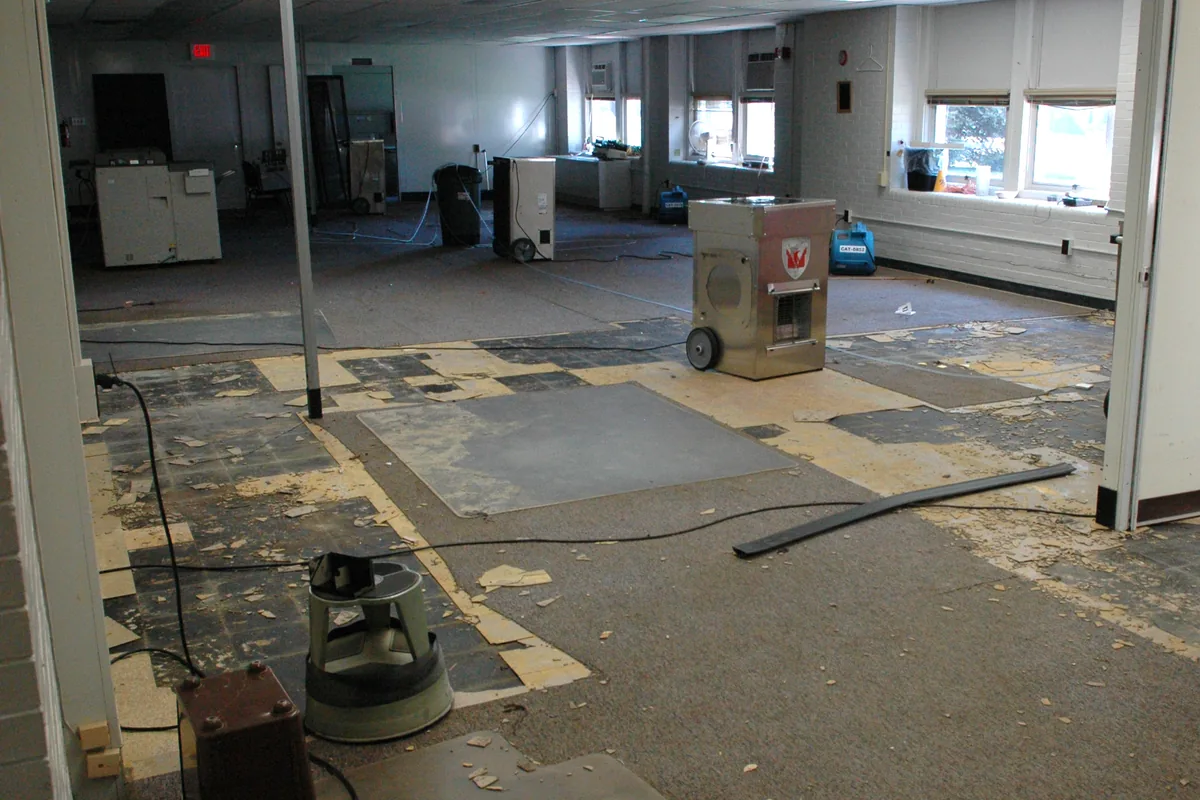
If the concealed edge is wet, drying may require access. That could mean removing a section of baseboard, drilling small holes in the wall cavity, or lifting a flooring edge. Reconstruction may then be needed to restore those access points. A quote that includes only drying may leave you with an unfinished edge; a quote that includes only reconstruction may seal in moisture.
05 / PLAN YOUR CLEANUP
Quote Scope vs. Final Cost
Ask whether the written price is fixed for a defined scope or an estimate, and how any added work would be approved. Ask for written approval before additional work is added. Ask what is included, what is excluded, and what conditions would trigger a change order.
- Does the scope include moisture assessment at the concealed edge?
- Does it include extraction and drying, or only source repair?
- Does it include selective removal to access the wet edge?
- Does it include reconstruction of removed baseboard, wallboard, or flooring?
- Does it include monitoring and final moisture checks?
- What conditions would change the final cost?
06 / PLAN YOUR CLEANUP
A Simple Scope Comparison Worksheet
Use this worksheet when you call. It helps you compare quotes on the same terms rather than comparing a drying-only scope to a full reconstruction scope.
- Source repair: who is responsible, and is it complete?
- Moisture assessment: who checks the concealed edge, and with what method?
- Extraction and drying: what equipment, how many days, and how is dryness verified?
- Selective removal: what may be removed to access the edge?
- Reconstruction: what will be replaced, and by whom?
- Final cost: what is fixed, what is estimated, and what could change?
07 / PLAN YOUR CLEANUP
When to Call for Help
Call for help if the concealed edge stays wet after source repair, if the wall feels soft, if you see bubbling or staining that spreads, or if you cannot safely check the area yourself. Also call if electrical components are wet or suspect. Do not delay reasonable mitigation while waiting for a quote; safe actions like stopping the source and documenting conditions can continue.
For a deeper look at drying methods and monitoring, see the Structural Drying guide. It explains how drying is planned and verified, which can help you ask better questions during a quote call.
08 / PLAN YOUR CLEANUP
What to Have Ready for the Call
- Photos of the wet baseboard, wall seam, and floor edge.
- The date the leak was repaired and when you first noticed wetness.
- Any moisture meter readings you collected safely.
- Notes on softness, odor, or discoloration.
- Your questions about scope, drying, removal, and reconstruction.
- A pen to write down what each provider says is included and excluded.
A wet baseboard days after a leak repair is a signal to check the concealed edge, not to assume the problem is solved. Keep electrical safety first, document what you find, and compare scopes that separate source repair, drying, and reconstruction. That preparation helps you get a quote you can actually compare.
YOUR WRITTEN-SCOPE CHECKLIST
Turn the conversation into clear answers.
Check an item when you understand how it is addressed in the written scope. These checks organize your questions; they do not certify the condition of a property.
CHECK A WRITTEN ESTIMATE
What do the listed charges add up to?
Enter amounts from an estimate you already have. This adds your figures; it does not predict restoration prices. Blank fields count as zero, so confirm missing charges with the provider.
Only the amounts entered are included. Taxes, rebuilding, source repair and changes may be additional.
FREE QUOTE-PREPARATION TOOL
Know what to say when you call.
Build a short description using what you already know. Your notes stay on this page; this does not send a request or book service.
Your call notes
Questions to ask: A dry-looking baseboard can hide a wet concealed edge. Check the edge, document what you find, and get a scope comparison before authorizing repairs. Do you serve my address? What assessment fees apply, and what is excluded?
Common questions
Why is my baseboard wet days after the leak was repaired?
The repair likely stopped the source but did not dry the concealed edge where wallboard, framing, insulation, and flooring meet. Water can remain trapped there and wick back into the baseboard.
Can I just dry the baseboard with a fan?
A fan may help surface moisture, but it may not reach the concealed edge. If the edge stays wet, drying equipment or selective removal may be needed. Avoid electrical hazards and do not place cords near standing water.
Does my insurance cover this?
Coverage depends on your policy and the cause. This article does not interpret insurance policies. Ask your adjuster whether the scope includes concealed-edge drying and reconstruction.
How do I compare quotes for this work?
Ask each provider to separate source repair, extraction and drying, selective removal, and reconstruction. Compare what is included, what is excluded, and what conditions would change the final cost.
YOUR NEXT STEP
A clearer conversation.
A more useful quote.
Have your ZIP code and property details ready. Confirm address coverage, fees and the proposed scope before booking.
Call for Quote · (833) 628-1561 ↗Houston Water Recovery connects callers with independent providers. Availability, qualifications, work and pricing are confirmed by the provider.
Sources & further reading
This guide explains public guidance and questions to ask. It is not a property assessment or a documented customer case, and no technician review is claimed.
CDC: Electrical hazards after flooding ↗EPA: Flooded homes cleanup guidance ↗