

THE QUICK ANSWER
What should you know first?
The practical way to avoid paying twice is to normalize every estimate into the same line-item categories, then mark each line as source repair, cleanup, drying, or reconstruction. Overlap usually hides in broad allowances, tear-out that reappears as carpentry, and equipment charges that are not tied to a drying plan.
Prepare your questions ↓AT A GLANCE
The decisions behind the quote.
Source repair
Fixing the failed supply line, drain, appliance connection, or exterior opening. This is separate from removing water or rebuilding finishes.
Cleanup and drying
Extraction, controlled demolition, air movement, dehumidification, and moisture checks. These lines should connect to a drying plan, not to finished carpentry.
Reconstruction
Cabinets, countertops, flooring, paint, trim, and fixtures installed after the structure is dry. Ask whether tear-out credit is already included.
01 / UNDERSTAND THE PROCESS
Start with a normalized line-item worksheet
A normalized worksheet puts every estimate into the same four columns: source repair, cleanup, drying, and reconstruction. This is not a general budget exercise. It is a way to see whether a kitchen repair estimate is paying again for work already covered in a water cleanup scope.
- Source repair: the failed supply line, drain, appliance connection, or exterior opening.
- Cleanup: extraction, debris removal, controlled demolition, and surface cleaning.
- Drying: air movers, dehumidifiers, moisture checks, and monitoring visits.
- Reconstruction: cabinets, countertops, flooring, paint, trim, and fixtures.
02 / UNDERSTAND THE PROCESS
Compare scope boundaries, not just totals
A lower total can still leave you paying twice if it excludes tear-out that the other estimate includes. A higher total can be reasonable if it carries drying equipment, monitoring, and disposal that the other quote leaves out. The useful comparison is where each scope begins and ends.
03 / UNDERSTAND THE PROCESS
Separate extraction and drying from reconstruction
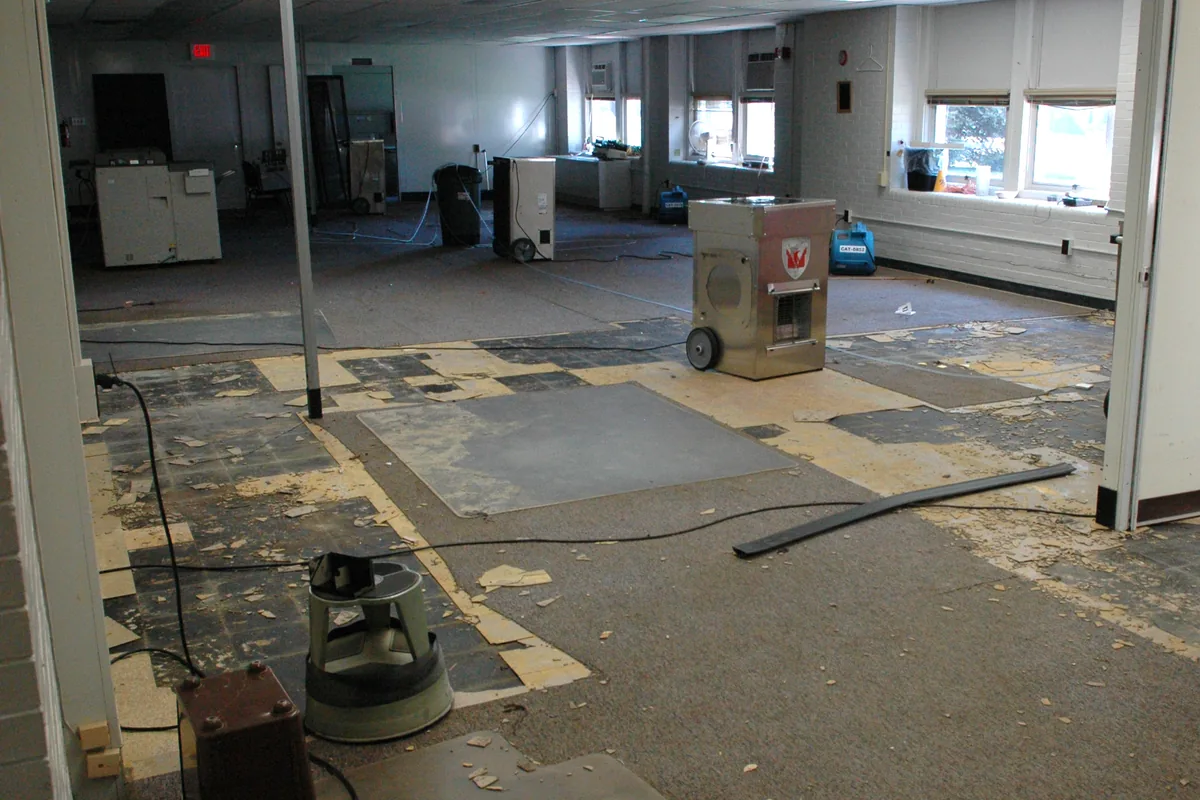
Extraction removes standing water. Drying manages moisture in materials. Reconstruction replaces or finishes what was removed or damaged. When a single estimate blends these, ask for a breakdown. The Structural Drying guide explains how drying goals and monitoring are typically documented.
04 / UNDERSTAND THE PROCESS
Watch for common overlap points
- Tear-out and disposal listed in both cleanup and reconstruction.
- Cabinet removal charged once as demolition and again as carpentry.
- Flooring removal charged in cleanup and again in floor replacement.
- Equipment charges that do not match the drying plan or monitoring period.
- Cleaning of salvageable cabinets charged alongside full cabinet replacement.
05 / UNDERSTAND THE PROCESS
Ask for a written exclusion list
An exclusion list tells you what is not included. That is often more useful than a long inclusion list because it shows where a second invoice could appear. Ask each provider to state what they will not do, what they expect another trade to do, and what happens if hidden moisture is found after work begins.
06 / UNDERSTAND THE PROCESS
Prepare for the quote call
Before you call, gather your photos, moisture readings, the drying plan, and every estimate page. Ask the person on the call to walk through one line at a time and mark it as source repair, cleanup, drying, or reconstruction. If a line could fit two categories, ask which one it belongs to and why.
- Which line items are cleanup and which are reconstruction?
- Is tear-out and disposal included once or twice?
- Does the drying plan list equipment, quantity, and monitoring?
- What is excluded from this scope?
- Who supplies and installs each fixture or appliance?
- What changes the scope if hidden moisture is found?
07 / UNDERSTAND THE PROCESS
Document before and after each phase
Photos of removed materials, moisture readings, and completed work help you match invoices to scope. Keep a simple log with dates, areas, and what changed. This is not a substitute for a professional inspection, but it gives you a factual record when a line item is questioned.
08 / UNDERSTAND THE PROCESS
Use safe judgment while you sort out the paperwork
Avoid electrical hazards. Do not stand in water near outlets, appliances, or panels. Contact qualified help for electrical, structural, contamination, or mold concerns. Reasonable mitigation should not be delayed while you compare estimates. The EPA flooded homes guidance and CDC electrical safety page are useful background for safe initial steps.
09 / UNDERSTAND THE PROCESS
Keep insurance and payment decisions separate
Your insurance claim and your contractor payment are related but not identical. The Texas Department of Insurance claim tips explain how to document a claim and ask questions about scope. Use that process alongside your normalized worksheet so you can see what is covered, what is excluded, and what you are approving.
YOUR WRITTEN-SCOPE CHECKLIST
Turn the conversation into clear answers.
Check an item when you understand how it is addressed in the written scope. These checks organize your questions; they do not certify the condition of a property.
CHECK A WRITTEN ESTIMATE
What do the listed charges add up to?
Enter amounts from an estimate you already have. This adds your figures; it does not predict restoration prices. Blank fields count as zero, so confirm missing charges with the provider.
Only the amounts entered are included. Taxes, rebuilding, source repair and changes may be additional.
FREE QUOTE-PREPARATION TOOL
Know what to say when you call.
Build a short description using what you already know. Your notes stay on this page; this does not send a request or book service.
Your call notes
Questions to ask: Compare categories, not totals. A clear line-item map shows where one scope stops and another starts. Do you serve my address? What assessment fees apply, and what is excluded?
Common questions
Is water extraction the same as kitchen reconstruction?
No. Extraction and drying address moisture in the structure. Reconstruction replaces or finishes materials after drying goals are met. One estimate may include both, but they should be separate line items so you can see what you are paying for.
What does a broad allowance hide?
A broad allowance can hide labor, materials, disposal, or a second markup. Ask for a unit price or a defined quantity where possible, and compare that line across estimates before approving it.
Should I stop mitigation until I compare estimates?
No. Reasonable mitigation should not be delayed while you compare paperwork. Avoid electrical hazards, document conditions, and contact qualified help for unsafe situations.
How do I know if tear-out is double-charged?
Look for demolition, removal, haul-away, and disposal in both the cleanup scope and the reconstruction scope. If the same material appears in both, ask for a credit or a written explanation.
YOUR NEXT STEP
A clearer conversation.
A more useful quote.
Have your ZIP code and property details ready. Confirm address coverage, fees and the proposed scope before booking.
Call for Quote · (833) 628-1561 ↗Houston Water Recovery connects callers with independent providers. Availability, qualifications, work and pricing are confirmed by the provider.
Sources & further reading
This guide explains public guidance and questions to ask. It is not a property assessment or a documented customer case, and no technician review is claimed.
CDC: Electrical hazards after flooding ↗EPA: Flooded homes cleanup guidance ↗Texas Department of Insurance: Claim tips ↗