

THE QUICK ANSWER
What should you know first?
Start by stopping the water source and making the area safe. Then decide cabinet by cabinet: dry in place only when the cabinet is structurally sound, water did not wick into particleboard or the wall cavity, and the material can dry within a reasonable window. Remove doors, drawers, and toe kicks to improve airflow, and document conditions before removal. Replace saturated particleboard, swollen or delaminating boxes, and cabinets with soft or crumbly cores. Treat source repair, cleanup, drying, and reconstruction as separate line items so quotes are comparable.
Prepare your questions ↓AT A GLANCE
The decisions behind the quote.
Dry in place
Best when the box is solid, water is surface-level, and air can reach the wet faces after doors, drawers, and toe kicks are removed. Verify with a moisture meter, not touch.
Remove and dry
Use when water reached the wall cavity or the cabinet back, or when the cabinet blocks drying of the assembly behind it. Removal may be partial and reversible.
Replace
Choose when particleboard is swollen, delaminating, soft, or crumbly, or when the box has lost structural integrity. Replacement is a reconstruction item, not a cleaning item.
01 / UNDERSTAND THE PROCESS
Start with safety and source control
Before you sort cabinets, stop the water source and make the area safe. Avoid electrical hazards: do not work near outlets, switches, or appliances if the area is wet or if power cannot be confirmed off. The CDC advises avoiding electrical hazards after flooding, and the same caution applies to any significant water leak near cabinets. If you are unsure about electrical safety, contact qualified help. Reasonable mitigation, such as shutting off the water and removing standing water away from electrical equipment, should not be delayed while you wait for a full assessment.
02 / UNDERSTAND THE PROCESS
Separate source repair from cleanup
A failed supply line, drain, or appliance is a source repair item. Cleaning surfaces, extracting water, and drying the structure are cleanup and drying items. Replacing cabinets, countertops, or drywall is reconstruction. These are different trades and different quote lines. If a quote bundles them without explanation, ask for a breakdown. The EPA flooded homes guidance treats cleanup and repair as distinct phases, which is a useful model for comparing scopes.
03 / UNDERSTAND THE PROCESS
Dry-in-place criteria
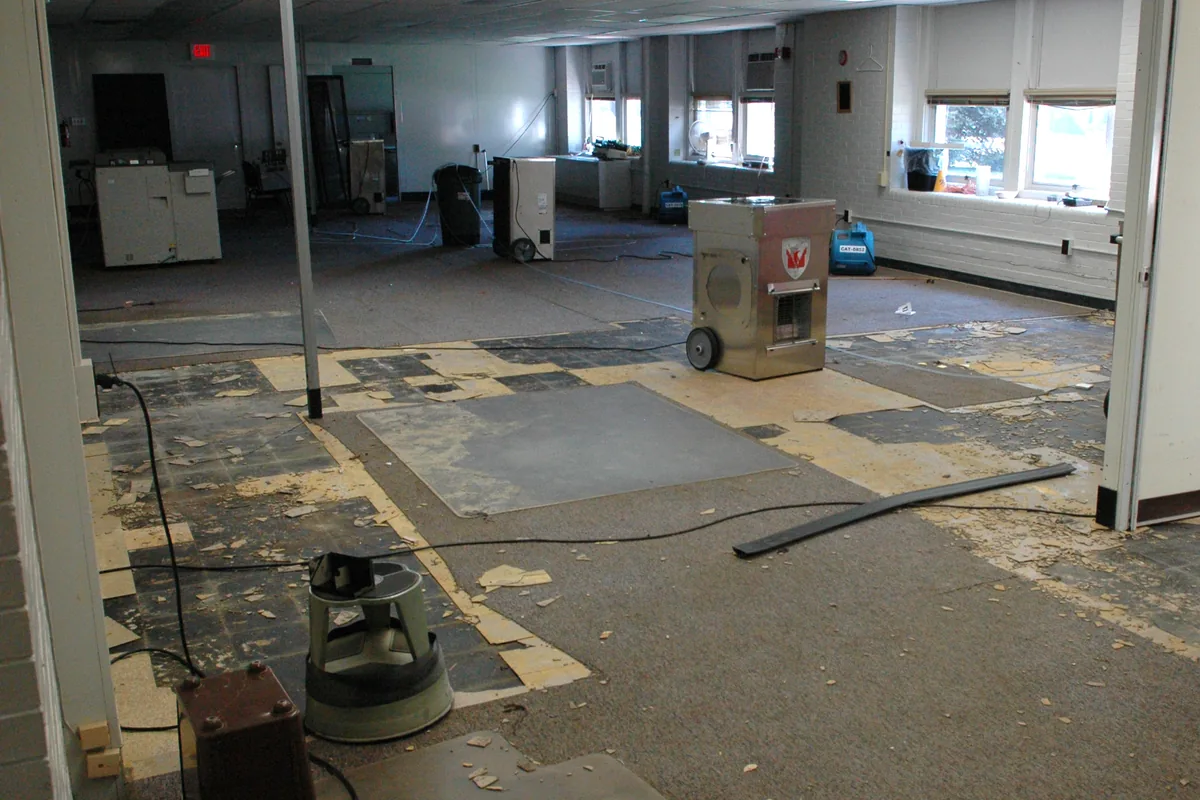
Dry in place only when all of the following are true: the cabinet box is structurally sound, the water did not wick into particleboard or the wall cavity, and airflow can reach the wet faces after doors, drawers, and toe kicks are removed. Use a moisture meter to confirm the box, back panel, and nearby wall are drying. If the cabinet blocks airflow to a wet wall, dry-in-place may not be enough. The Structural Drying guide explains how drying is verified and why airflow access matters.
04 / UNDERSTAND THE PROCESS
Remove-and-dry criteria
Remove and dry when water reached the wall cavity or the cabinet back, or when the cabinet prevents the assembly behind it from drying. Removal may be partial: pulling the cabinet away from the wall, removing a back panel, or taking out a base cabinet to expose the wall. Document conditions before removal with photos and notes. Keep removed materials until the scope is agreed, because they are evidence of the wet condition.
05 / UNDERSTAND THE PROCESS
Replace criteria
Replace when particleboard is swollen, delaminating, soft, or crumbly, or when the box has lost structural integrity. Particleboard swells and does not return to its original shape or strength. Plywood and solid wood may recover if dried promptly and thoroughly, but they still need moisture verification. Replacement is a reconstruction item. If mold is suspected, follow EPA mold cleanup guidance and avoid disturbing suspected mold without appropriate protection.
06 / UNDERSTAND THE PROCESS
A per-cabinet worksheet
Use one row per cabinet. Record the cabinet location, material type, moisture reading, visible condition, and decision. Write the reason next to each decision. This turns a vague kitchen-wide judgment into a set of specific, comparable line items. It also helps you ask better questions when you request a quote.
- Cabinet location and number.
- Box material: particleboard, plywood, or solid wood.
- Moisture reading at bottom, back, and seams.
- Visible swelling, delamination, or softness.
- Decision: dry in place, remove and dry, or replace.
- Reason for the decision.
- Whether the wall behind the cabinet is wet.
- Whether source repair is complete.
07 / UNDERSTAND THE PROCESS
Quote scope versus final cost
A quote is a scope statement, not a final cost. Ask what is included: source repair, extraction, drying equipment, moisture verification, cabinet removal, disposal, and reconstruction. Ask what would change the scope, such as finding wet wall cavities or swollen particleboard behind a finished panel. A clear scope lets you compare offers even when totals differ. Do not treat a low number as complete if it omits drying verification or reconstruction.
08 / UNDERSTAND THE PROCESS
How to prepare for a quote call
Have your worksheet, photos, and moisture readings ready. State the water source and whether it is repaired. List which cabinets you believe should be dried, removed, or replaced, and why. Ask the provider to separate source repair, cleanup, drying, and reconstruction in their written scope. Ask how drying will be verified and what would trigger a scope change. This preparation keeps the call focused on decisions rather than general descriptions.
09 / UNDERSTAND THE PROCESS
When to act promptly
Prompt action limits secondary damage. Stop the source, remove standing water away from electrical equipment, and improve airflow where it is safe to do so. Avoid electrical hazards and contact qualified help for electrical, structural, or contamination concerns. Do not delay reasonable mitigation while waiting for a full assessment. If you suspect mold, follow EPA mold cleanup guidance and avoid disturbing suspected mold without appropriate protection.
YOUR WRITTEN-SCOPE CHECKLIST
Turn the conversation into clear answers.
Check an item when you understand how it is addressed in the written scope. These checks organize your questions; they do not certify the condition of a property.
CHECK A WRITTEN ESTIMATE
What do the listed charges add up to?
Enter amounts from an estimate you already have. This adds your figures; it does not predict restoration prices. Blank fields count as zero, so confirm missing charges with the provider.
Only the amounts entered are included. Taxes, rebuilding, source repair and changes may be additional.
FREE QUOTE-PREPARATION TOOL
Know what to say when you call.
Build a short description using what you already know. Your notes stay on this page; this does not send a request or book service.
Your call notes
Questions to ask: Decide per cabinet, document before removal, and separate source repair, cleanup, drying, and reconstruction in every quote. Do you serve my address? What assessment fees apply, and what is excluded?
Common questions
Can swollen particleboard cabinets be dried and saved?
Swollen or crumbly particleboard usually does not return to its original shape or strength after water exposure. If the box is soft, delaminating, or losing screw holding, replacement is the more reliable path.
Should cabinets be removed to dry the wall behind them?
If water reached the wall cavity or the cabinet back is wet, the assembly behind the cabinet may need airflow to dry. Partial removal, such as pulling the cabinet away from the wall or removing a back panel, can sometimes provide access without full replacement.
How do I compare a drying quote with a replacement quote?
Ask for line items: source repair, water extraction, structural drying, cabinet removal, disposal, and reconstruction. A drying quote should state how drying will be verified, such as moisture readings.
Is cabinet cleaning enough after a water leak?
Cleaning addresses surface residue, but it does not dry the cabinet box or the wall cavity. If moisture remains behind the cabinet or inside the box, cleaning alone leaves the wet condition in place.
YOUR NEXT STEP
A clearer conversation.
A more useful quote.
Have your ZIP code and property details ready. Confirm address coverage, fees and the proposed scope before booking.
Call for Quote · (833) 628-1561 ↗Houston Water Recovery connects callers with independent providers. Availability, qualifications, work and pricing are confirmed by the provider.
Sources & further reading
This guide explains public guidance and questions to ask. It is not a property assessment or a documented customer case, and no technician review is claimed.
CDC: Electrical hazards after flooding ↗EPA: Flooded homes cleanup guidance ↗EPA: Mold cleanup in your home ↗