

THE QUICK ANSWER
What should you know first?
A useful cabinet water damage estimate separates four scopes: the source repair, the cabinet base, the toe kick, and the floor. It should also state whether the quote covers extraction and drying only or also reconstruction, and whether the price is a scope estimate or a final cost. Ask for those four areas to be listed line by line before you compare totals.
Prepare your questions ↓AT A GLANCE
The decisions behind the quote.
Source repair vs. cleanup
Fixing the supply line, drain, or appliance leak is a source repair. Extracting water and drying the cabinet cavity is cleanup. A quote may include one, both, or neither, so ask which trade is responsible for each.
Extraction and drying vs. reconstru…
Extraction and drying remove moisture and stabilize the space. Reconstruction replaces damaged base panels, toe kicks, or flooring. These are separate scopes and may appear as separate quotes or phases.
Scope quote vs. final cost
A scope quote lists the work planned at a point in time. A final cost reflects what was actually done after hidden damage is exposed. Ask which one you are signing and how changes are approved.
01 / UNDERSTAND THE PROCESS
Start with the source, because cleanup cannot fix a running leak
Before cabinet drying or replacement can be effective, the water source must be stopped. A supply line, drain connection, appliance hose, or exterior intrusion may be the cause. Source repair is a distinct scope from cleanup, and it may be handled by a plumber, appliance technician, or other qualified trade. If the source is not addressed, moisture can return after drying.
For your own safety, avoid electrical hazards. Do not stand in water near outlets, appliances, or electrical panels. If you see standing water near electrical equipment, keep clear and contact qualified help. Reasonable mitigation, such as shutting off the water supply if it is safe to do so, can limit damage while you arrange service.
02 / UNDERSTAND THE PROCESS
Separate the cabinet base from the toe kick
The cabinet base is the structural box that sits on the floor. The toe kick is the recessed panel at the bottom front. Water often wicks into the base through the toe kick area or the floor. An estimate that lists them separately makes it easier to see whether the base will be dried in place, partially removed, or replaced, and whether the toe kick will be reused or replaced.
- Cabinet base: the sides, bottom, and back panels that form the box.
- Toe kick: the front lower panel that covers the gap under the cabinet.
- Floor covering: the finished floor under and around the cabinet.
- Cabinet cavity: the space behind and beneath the cabinet where water can travel.
03 / UNDERSTAND THE PROCESS
Extraction and drying are not the same as reconstruction
Extraction removes standing water. Drying reduces moisture in materials. Reconstruction replaces materials that cannot be dried or that were removed to access the cavity. A quote may cover extraction and drying only, with reconstruction quoted separately after the cabinet is opened. Ask which phase you are approving and what triggers the next phase.
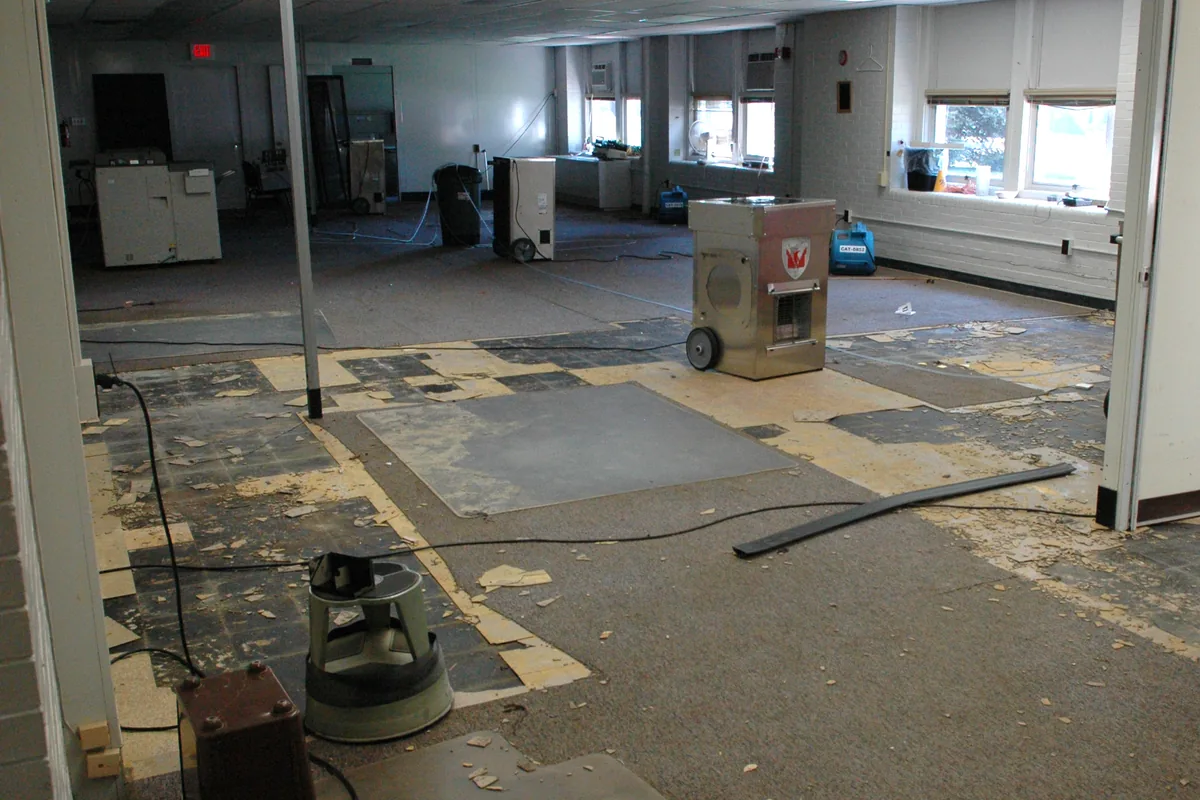
Structural drying is a process, not a single visit. It may involve air movers, dehumidifiers, and moisture readings over time. The scope should say what will be dried, how access will be created, and what will be replaced. For a deeper look at drying principles, see the Structural Drying guide.
04 / UNDERSTAND THE PROCESS
Scope quote versus final cost: know what you are signing
A scope quote lists the work planned at a point in time. A final cost reflects what was actually done after hidden damage was exposed. Hidden damage behind cabinets, under floors, or inside walls can change the scope. Ask whether the document is an estimate, a fixed-price contract, or a time-and-materials agreement. Ask how change orders are approved and documented.
- Ask if the quote is a scope estimate or a final cost.
- Ask what happens if hidden damage is found after work begins.
- Ask for written approval before additional work is added.
- Keep a copy of the final scope and any change orders.
05 / UNDERSTAND THE PROCESS
A simple worksheet for comparing cabinet water quotes
Use the same four categories for each quote you receive. If a category is missing, ask where it is addressed. This makes it easier to compare totals without assuming one quote is complete.
- Source repair: included, excluded, or handled by another trade?
- Cabinet base: dried in place, partially removed, or replaced?
- Toe kick: reused, replaced, or not mentioned?
- Floor: dried, removed, or replaced?
- Extraction and drying: included or separate?
- Reconstruction: included or separate?
- Quote type: scope estimate or final cost?
- Change order process: written approval required?
06 / UNDERSTAND THE PROCESS
Prepare for the quote call
Have your photos, moisture readings if available, and the source repair status ready. Tell the provider what is wet, what has been removed, and what is still in place. Ask them to walk through the four scopes: source, base, toe kick, and floor. Ask whether the quote covers extraction and drying only or also reconstruction. Ask whether it is a scope estimate or a final cost.
For insurance-related questions, the Texas Department of Insurance offers general claim tips. For cleanup guidance, the EPA provides flooded-home resources. For electrical safety, the CDC advises avoiding electrical hazards after flooding. These sources are background only; your specific situation may require qualified professional help.
07 / UNDERSTAND THE PROCESS
When to call for help
Call for help when water has reached cabinets and you cannot safely stop the source, when electrical equipment is near water, or when the scope of drying and reconstruction is unclear. Prompt safe action can limit damage, but avoid electrical hazards and contact qualified help where appropriate. Do not delay reasonable mitigation while waiting for a quote.
YOUR WRITTEN-SCOPE CHECKLIST
Turn the conversation into clear answers.
Check an item when you understand how it is addressed in the written scope. These checks organize your questions; they do not certify the condition of a property.
CHECK A WRITTEN ESTIMATE
What do the listed charges add up to?
Enter amounts from an estimate you already have. This adds your figures; it does not predict restoration prices. Blank fields count as zero, so confirm missing charges with the provider.
Only the amounts entered are included. Taxes, rebuilding, source repair and changes may be additional.
FREE QUOTE-PREPARATION TOOL
Know what to say when you call.
Build a short description using what you already know. Your notes stay on this page; this does not send a request or book service.
Your call notes
Questions to ask: Ask for four line items: source repair, base, toe kick, and floor. Confirm whether the quote covers extraction and drying only or also reconstruction, and whether it is a scope estimate or a final cost. Do you serve my address? What assessment fees apply, and what is excluded?
Common questions
Does a cabinet water damage estimate usually include the source repair?
Not always. Some estimates cover only extraction, drying, and cabinet work, while the source repair is handled by a plumber or appliance technician. Ask who is responsible for stopping the water before cleanup begins.
Should the toe kick be a separate line item?
It helps to see it separately. The toe kick is often removed to access the cabinet base and floor, and it may need replacement. If it is bundled into a general cabinet line, ask how it will be handled.
How do I compare a scope estimate with a final cost?
A scope estimate describes planned work before hidden damage is known. A final cost reflects actual work after opening the cabinet base or floor. Ask which one the quote represents and how changes are documented.
YOUR NEXT STEP
A clearer conversation.
A more useful quote.
Have your ZIP code and property details ready. Confirm address coverage, fees and the proposed scope before booking.
Call for Quote · (833) 628-1561 ↗Houston Water Recovery connects callers with independent providers. Availability, qualifications, work and pricing are confirmed by the provider.
Sources & further reading
This guide explains public guidance and questions to ask. It is not a property assessment or a documented customer case, and no technician review is claimed.
CDC: Electrical hazards after flooding ↗EPA: Flooded homes cleanup guidance ↗Texas Department of Insurance: Claim tips ↗