
THE QUICK ANSWER
What should you know first?
Before you approve a ceiling opening, separate the quote into three scopes: source repair (fixing the leak), drying (extraction and structural drying), and reconstruction (patch, texture, paint). Ask who owns each step, what evidence justifies the opening, how the cavity will be protected, and how the patch will be finished. This keeps the quote comparable and helps you avoid paying twice for the same work.
Prepare your questions ↓AT A GLANCE
The decisions behind the quote.
Reason for the opening
Ask what evidence justifies cutting: moisture readings, visible staining, a confirmed leak path, or access needed to repair the source. An opening without a stated reason is hard to compare or cap.
Protection during work
Ask how floors, furniture, and occupants will be protected from dust, debris, and drips, and how the work area will be isolated while the ceiling is open.
Drying and verification
Ask whether extraction or drying equipment is included, how moisture will be monitored, and what readings or observations will show the cavity is dry before closing.
01 / UNDERSTAND THE PROCESS
Start with the reason for the opening
A ceiling opening should have a stated purpose. It might be needed to access a leaking pipe, to dry a concealed cavity, or to remove saturated material. Ask the estimator to name the reason and the evidence behind it, such as moisture readings, visible staining, or a confirmed leak path. If the reason is vague, the quote is hard to compare and the opening is hard to justify later.
This is also where you separate source repair from cleanup. Fixing the leak is one scope. Removing water, drying the cavity, and replacing the ceiling is another. A quote that blurs them can leave you paying for drying before the source is fixed, or patching a ceiling that will get wet again.
02 / UNDERSTAND THE PROCESS
Protect the room before the cut
Opening a ceiling releases dust, insulation, and debris. Ask how floors, furniture, and occupants will be protected, and how the work area will be isolated. Plastic sheeting, floor protection, and negative air machines are common tools, but the quote should say what is included. If protection is not mentioned, ask whether it is assumed or excluded.
Safety comes first. Avoid electrical hazards near wet ceilings, and contact qualified help where appropriate. Reasonable mitigation, such as containing debris and keeping people away from the work area, should not be delayed while you gather quotes.
03 / UNDERSTAND THE PROCESS
Separate extraction and drying from reconstruction
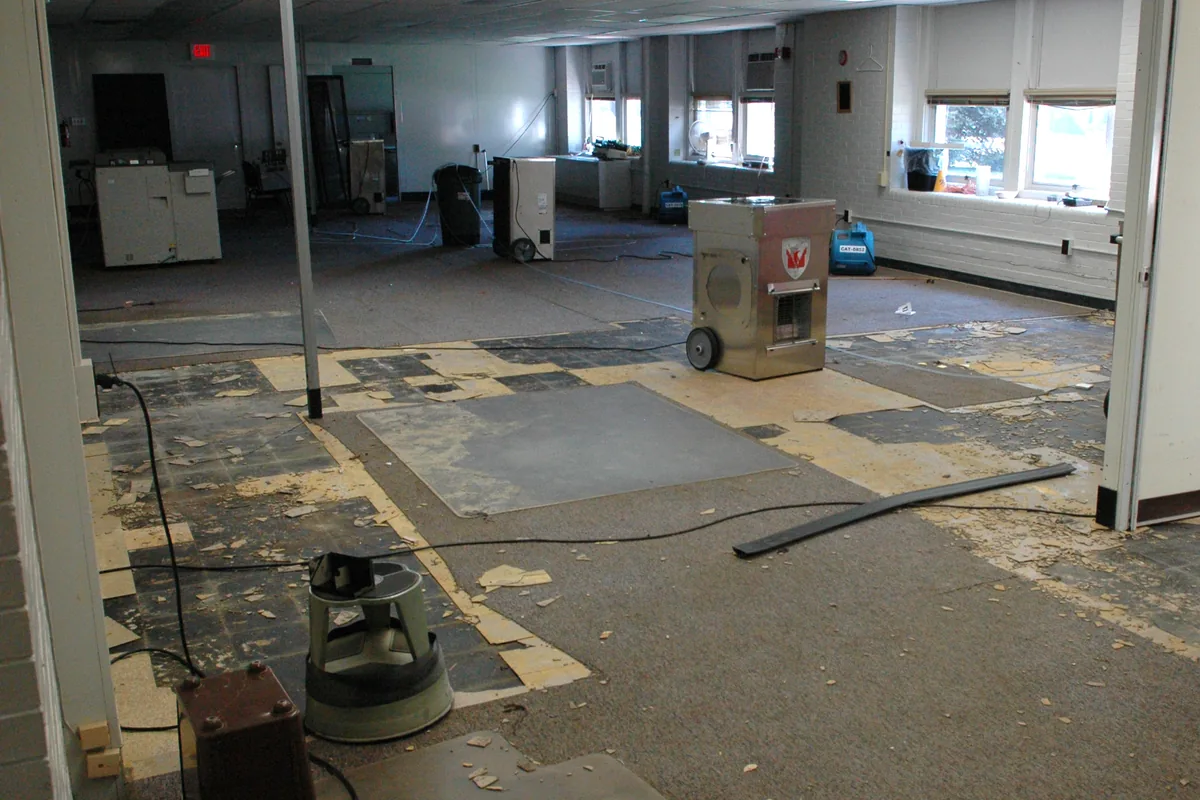
Extraction and drying remove moisture. Reconstruction puts the ceiling back. These are different scopes with different skills, equipment, and timelines. Ask whether the quote includes drying equipment, how moisture will be monitored, and what readings or observations will show the cavity is dry before it is closed. For a deeper look at the drying side, see the Structural Drying guide.
- Ask whether extraction or drying equipment is included or billed separately.
- Ask how moisture will be monitored and what evidence will show the cavity is dry.
- Ask who decides when drying is complete and whether that decision is documented.
- Ask whether reconstruction waits for verified drying or is scheduled in parallel.
Closing a ceiling before it is dry can trap moisture and lead to repeated work. The quote should make the drying step visible, not bury it in a lump sum.
04 / UNDERSTAND THE PROCESS
Define the patch and finish scope
A ceiling repair can stop at drywall replacement or continue through texture and paint. Ask which one the quote covers. If it stops at replacement, ask who will finish the surface and whether matching the existing texture is included. Unfinished patches are a common surprise line item, and matching texture can be its own skill.
Also ask how the patch will be sized. A small access point may need a larger patch to blend the repair. The quote should describe the finished result, not just the cut.
05 / UNDERSTAND THE PROCESS
Use a scope comparison worksheet
When you have more than one quote, compare them line by line. List source repair, protection, extraction or drying, moisture verification, drywall replacement, texture, and paint. Mark each as included, excluded, or unclear. This turns a confusing price comparison into a scope comparison and shows where the quotes actually differ.
- Source repair: who fixes the leak, and is it in this quote?
- Protection: what is covered for floors, furniture, and occupants?
- Drying: what equipment, monitoring, and verification are included?
- Patch: does the quote stop at drywall or include texture and paint?
- Exclusions: what is explicitly not covered, and what assumptions are stated?
Quote scope is not the same as final cost. A low quote may exclude texture, paint, or drying verification. A higher quote may include steps that prevent a second repair. Compare what is actually covered before you decide.
06 / UNDERSTAND THE PROCESS
Prepare for the quote call
Before the call, write down what you have seen: where the stain is, when it appeared, whether the leak is active, and any prior repairs. Ask the estimator to walk through the four questions: reason, protection, drying, and patch. Take notes and ask for the scope in writing. If the estimator cannot explain why the opening is needed or how drying will be verified, that is useful information.
You do not need to diagnose the leak or decide the repair method yourself. Your job is to make the quote comparable and to keep the work safe. Ask for the scope, the assumptions, and the exclusions, then compare.
07 / UNDERSTAND THE PROCESS
Where to go next
If drying is part of your project, review the Structural Drying guide before you approve the opening. It explains how drying is typically scoped and verified, which helps you ask better questions on the quote call.
YOUR WRITTEN-SCOPE CHECKLIST
Turn the conversation into clear answers.
Check an item when you understand how it is addressed in the written scope. These checks organize your questions; they do not certify the condition of a property.
CHECK A WRITTEN ESTIMATE
What do the listed charges add up to?
Enter amounts from an estimate you already have. This adds your figures; it does not predict restoration prices. Blank fields count as zero, so confirm missing charges with the provider.
Only the amounts entered are included. Taxes, rebuilding, source repair and changes may be additional.
FREE QUOTE-PREPARATION TOOL
Know what to say when you call.
Build a short description using what you already know. Your notes stay on this page; this does not send a request or book service.
Your call notes
Questions to ask: Ask why the opening is needed, how the area will be protected, how drying will be verified, and how the patch will be finished. Get those four answers in writing so the quote is comparable. Do you serve my address? What assessment fees apply, and what is excluded?
Common questions
Does a ceiling water damage quote include the leak repair?
Not always. Source repair, drying, and reconstruction are often separate scopes with different trades. Ask who owns each step and whether the quote assumes the leak is already fixed. If the source is not repaired, drying and patching may be wasted effort.
How do I compare two ceiling opening quotes?
Compare scope, not just the bottom line. Check whether each quote includes source repair, protection, extraction or drying, moisture verification, drywall replacement, texture, and paint. Ask for assumptions and exclusions in writing so you can see what is missing.
What should I ask before anyone cuts my ceiling?
Ask why the opening is needed, what evidence supports it, how the area will be protected, how drying will be verified, and how the patch will be finished. Also confirm who repairs the source and whether the quote stops at drywall replacement or includes texture and paint.
Is a ceiling opening always necessary for water damage?
No. Sometimes a smaller access point or no opening is enough, depending on the leak path and moisture readings. Ask what the opening is meant to accomplish and whether a less invasive option was considered. The decision should follow evidence, not habit.
YOUR NEXT STEP
A clearer conversation.
A more useful quote.
Have your ZIP code and property details ready. Confirm address coverage, fees and the proposed scope before booking.
Call for Quote · (833) 628-1561 ↗Houston Water Recovery connects callers with independent providers. Availability, qualifications, work and pricing are confirmed by the provider.
Sources & further reading
This guide explains public guidance and questions to ask. It is not a property assessment or a documented customer case, and no technician review is claimed.
CDC: Electrical hazards after flooding ↗EPA: Flooded homes cleanup guidance ↗EPA: Mold cleanup in your home ↗