
THE QUICK ANSWER
What should you know first?
A ceiling stain tells you water moved, not where it started. Before calling for cleanup, identify the likely source category—roof, plumbing supply, drain, or condensate—because source repair and water cleanup are separate scopes. Use the decision tree below to gather evidence, then ask for a quote that separates extraction, drying, and reconstruction.
Prepare your questions ↓AT A GLANCE
The decisions behind the quote.
Source repair vs. cleanup
Fixing a pipe, roof, or drain is source repair. Removing wet material and drying the structure is cleanup. These are usually different trades and different line items.
Extraction and drying vs. reconstru…
Extraction and drying address moisture. Reconstruction replaces damaged drywall, paint, or trim. A quote should label which phase each item belongs to.
Quote scope vs. final cost
A quote describes planned work and assumptions. Ask whether the written price is fixed for a defined scope or an estimate, and how any added work would be approved. Ask what is included and what would trigger a change order.
01 / UNDERSTAND THE PROCESS
Start With the Source Category, Not the Stain
A ceiling stain is evidence that water traveled through the structure. It does not tell you whether the water came from above the roof, a pipe inside a wall, a drain line, or condensation from an HVAC unit. Treating the stain without identifying the source category can lead to repeated damage and unnecessary reconstruction.
Use the questions below to narrow the likely category. You are not diagnosing the exact failure; you are gathering clues that help a qualified professional verify the source faster.
- Does the stain grow or darken during rain or snowmelt? That points toward roof or exterior wall sources.
- Does it appear when a specific fixture runs, like a shower, sink, or toilet? That points toward supply or drain lines.
- Is the stain near an HVAC air handler, duct, or condensate line? That points toward condensation.
- Is the stain on a top-floor ceiling with an attic above? That points toward roof, flashing, or attic plumbing.
- Is the stain on a lower-floor ceiling with a bathroom or kitchen above? That points toward plumbing or appliance leaks.
02 / UNDERSTAND THE PROCESS
Decision Tree: Roof, Plumbing, Drain, or Condensate
Roof and exterior sources often correlate with weather. Look for missing shingles, damaged flashing, or stains on attic sheathing. Plumbing supply leaks tend to be continuous or pressure-related and may show up as a slow drip. Drain leaks often appear only when water flows through the fixture above. Condensate issues are common near HVAC equipment and can look like a slow, persistent dampness.
If you can safely access the attic or the floor above, look for wet insulation, dripping pipes, or standing water. Do not touch wet electrical fixtures or wiring. If you see water near electrical components, keep away and contact qualified help.
03 / UNDERSTAND THE PROCESS
Source Repair and Cleanup Are Different Scopes
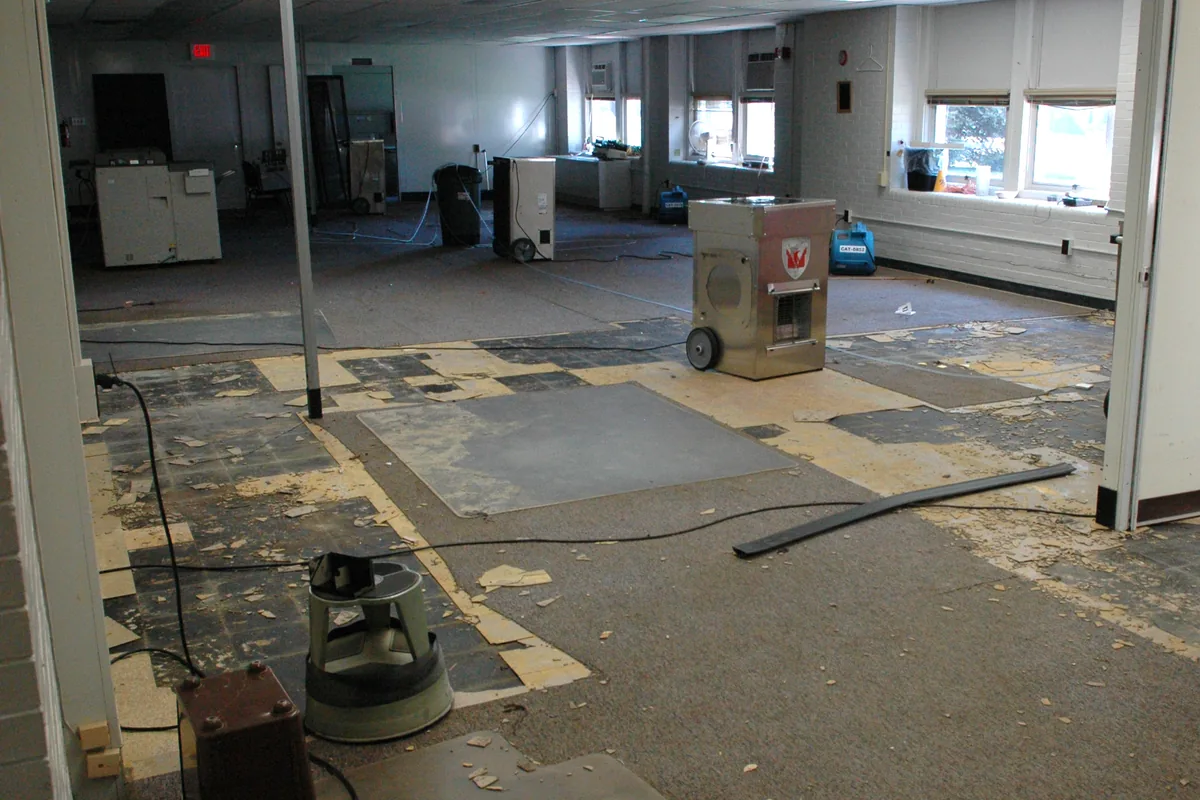
Source repair stops the water. Cleanup addresses the moisture that already entered the structure. A plumber or roofer may handle the source, while a restoration professional handles extraction, drying, and reconstruction. Mixing these scopes in one quote can hide what is actually included.
When you request a quote, ask for line items grouped by phase: source repair, extraction and drying, and reconstruction. This makes it easier to compare proposals and see where responsibilities change.
04 / UNDERSTAND THE PROCESS
Extraction and Drying vs. Reconstruction
Extraction removes standing water. Drying reduces moisture in materials like drywall, insulation, and framing. Reconstruction replaces materials that cannot be dried or that were removed to access the source. A quote that only mentions painting over a stain is not a complete scope.
Ask how moisture will be measured and documented. If drying equipment is proposed, ask which materials are expected to be dried in place and which may need removal. This is a scope question, not a guarantee of outcome.
05 / UNDERSTAND THE PROCESS
Quote Scope vs. Final Cost: What to Ask
Ask for written approval before additional work is added. Ask for written approval before additional work is added. Ask what is included, what is excluded, and what conditions would trigger a change order. This is normal in water damage work, but it should be explained upfront.
- What source repair is included, and who performs it?
- What moisture readings or documentation will be provided?
- Which materials are included in extraction and drying?
- What reconstruction is included, and what is excluded?
- What conditions would lead to additional work or cost?
06 / UNDERSTAND THE PROCESS
Prepare for the Call: A Short Worksheet
Before you call, write down what you observed. Include the stain location, when it appears, any nearby fixtures or roof areas, and whether you see active dripping. Note any electrical hazards and keep people away from wet ceilings or fixtures. This information helps the person on the phone route your request correctly.
If you have photos, have them ready. If you can safely contain a drip with a bucket, that is reasonable mitigation. Do not delay calling if you see active water near electrical components or if the ceiling is bulging.
07 / UNDERSTAND THE PROCESS
When to Act Promptly
Active dripping, bulging ceilings, or water near electrical fixtures are reasons to act promptly. Avoid contact with wet electrical components and keep people away from the area. Contact qualified help for source verification and safe mitigation. Delaying reasonable mitigation can allow moisture to spread, but safety comes first.
08 / UNDERSTAND THE PROCESS
What This Means for Your Next Step
Use the decision tree to identify the likely source category, then call a qualified professional to verify it. Ask for a quote that separates source repair, extraction and drying, and reconstruction. This approach helps you compare scopes and avoid paying for cleanup that does not address the cause.
YOUR WRITTEN-SCOPE CHECKLIST
Turn the conversation into clear answers.
Check an item when you understand how it is addressed in the written scope. These checks organize your questions; they do not certify the condition of a property.
CHECK A WRITTEN ESTIMATE
What do the listed charges add up to?
Enter amounts from an estimate you already have. This adds your figures; it does not predict restoration prices. Blank fields count as zero, so confirm missing charges with the provider.
Only the amounts entered are included. Taxes, rebuilding, source repair and changes may be additional.
FREE QUOTE-PREPARATION TOOL
Know what to say when you call.
Build a short description using what you already know. Your notes stay on this page; this does not send a request or book service.
Your call notes
Questions to ask: Identify the likely source category before requesting cleanup, because source repair and water cleanup are separate scopes. A quote that only addresses the stain may miss the cause. Do you serve my address? What assessment fees apply, and what is excluded?
Common questions
Can I tell the source just by the stain shape?
No. Stain shape can suggest a direction of flow, but it does not reliably identify whether the source is a roof, supply line, drain, or condensation. Use the decision tree to gather evidence, then have a qualified professional verify the source.
Should I call a roofer or a restoration company first?
If you suspect a roof leak, a roofer can assess the roof while a restoration professional addresses interior moisture. If the source is unclear, start with a plumber or general contractor who can trace the water path. The key is to separate source repair from cleanup.
What should a cleanup quote include?
Ask for a scope that separates source repair, extraction and drying, and reconstruction. It should list affected materials, moisture readings, drying equipment planned, and what would trigger additional work. Avoid quotes that only address visible staining.
Is it safe to wait if the stain is dry?
A dry stain may still indicate a past leak that damaged hidden materials. If you see active dripping, bulging, or electrical hazards, avoid contact and seek qualified help promptly.
YOUR NEXT STEP
A clearer conversation.
A more useful quote.
Have your ZIP code and property details ready. Confirm address coverage, fees and the proposed scope before booking.
Call for Quote · (833) 628-1561 ↗Houston Water Recovery connects callers with independent providers. Availability, qualifications, work and pricing are confirmed by the provider.
Sources & further reading
This guide explains public guidance and questions to ask. It is not a property assessment or a documented customer case, and no technician review is claimed.
CDC: Electrical hazards after flooding ↗EPA: Flooded homes cleanup guidance ↗