

THE QUICK ANSWER
What should you know first?
In the first 15 minutes after an indoor water leak, prioritize personal safety and stopping the source: avoid standing water near outlets, cords, or panels, shut off the water if you can reach the valve safely, and call a qualified professional for electrical or structural concerns. Then separate source repair from water cleanup and drying, and prepare a short scope list before requesting quotes.
Prepare your questions ↓AT A GLANCE
The decisions behind the quote.
Source repair
Fixing the failed pipe, valve, appliance connection, or fixture is a plumbing or appliance task. Cleanup and drying address the water that already escaped.
Extraction and drying
Removing standing water, pulling wet carpet, and setting air movers or dehumidifiers is a separate scope from repairing the leak itself.
Reconstruction
Replacing drywall, trim, flooring, or cabinets after drying is often a third scope. Ask whether your quote includes it or stops at dry standard.
01 / UNDERSTAND THE PROCESS
The first decision: is the area safe to enter?
Before you look for the leak, check whether water has reached electrical outlets, power strips, cords, or appliances. If it has, keep people and pets out of that area and contact a qualified electrician or emergency responder. The CDC's electrical hazard guidance after flooding is a useful reminder that water and electricity are a dangerous combination, even when the water looks shallow.
If the area is dry underfoot and no electrical equipment is affected, you can proceed carefully. Wear shoes with traction, watch for slick flooring, and avoid moving heavy or unstable items alone.
02 / UNDERSTAND THE PROCESS
Second decision: can you stop the source safely?
The fastest way to reduce damage is to stop the water. If you know where the fixture shutoff valve is and can reach it without standing in water, turn it clockwise until it stops. If that fails, the main shutoff may stop all water to the home. If the valve is stuck, broken, or in a flooded area, call a qualified plumber rather than forcing it.
Some leaks, such as a failed washing machine hose or a leaking water heater, may have their own shutoff nearby. Turning off the appliance and its supply valve can help. Do not attempt to repair a pressurized pipe or appliance connection yourself if you are not qualified.
03 / UNDERSTAND THE PROCESS
Third decision: what kind of help do you need?
It helps to separate three scopes that are often bundled in conversation but not always in one quote:
- Source repair: fixing the plumbing, appliance, or fixture that failed.
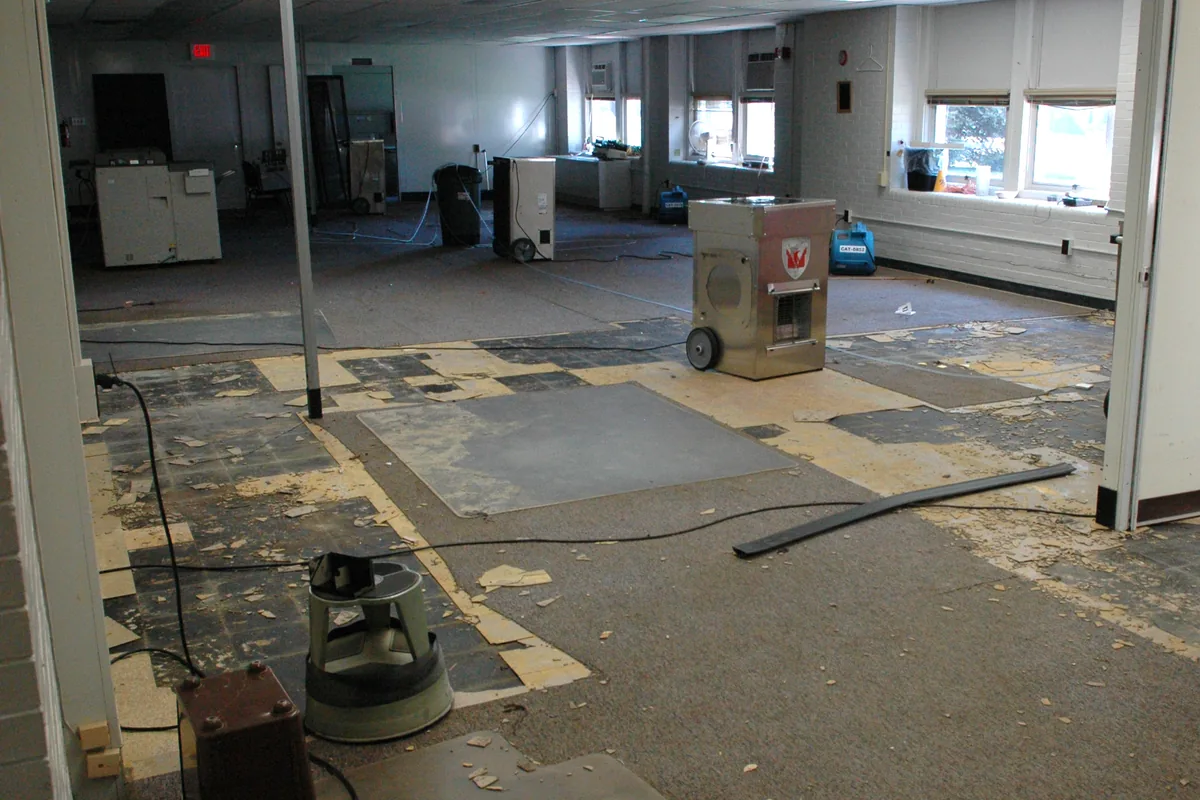
- Cleanup and drying: extracting standing water, removing unsalvageable materials, and drying the structure.
- Reconstruction: replacing drywall, trim, flooring, or cabinets after drying is complete.
A plumbing company may handle the source but not drying. A water cleanup provider may handle extraction and drying but not the pipe repair. A general contractor may handle reconstruction after drying. Ask each provider what they include and what they exclude.
04 / UNDERSTAND THE PROCESS
A simple scope worksheet for your quote calls
Before you call, write down a few facts. This helps you compare quotes and avoid confusion about what is covered.
- Where is the leak coming from, and is water still flowing?
- Which rooms or materials are wet: carpet, pad, drywall, baseboards, cabinets, ceiling?
- Is there standing water, and roughly how deep or how large an area?
- When did you first notice it, and when did you shut off the water?
- Have you noticed any electrical, gas, or structural concerns?
- What is your goal: stop the leak, dry the structure, or restore the room?
When you request a quote, ask whether it covers extraction, drying equipment, moisture checks, removal of wet materials, and reconstruction. Also ask whether the provider coordinates with a plumber or electrician if needed. For more on the drying stage, see our Structural Drying guide.
05 / UNDERSTAND THE PROCESS
What to do while you wait for help
If it is safe, you can limit the spread of water with towels, a mop, or a wet vacuum. Move small items off wet flooring only if the path is dry and clear. Do not lift wet carpet or padding if you suspect contaminated water, such as from a toilet or appliance discharge; leave that to a qualified provider.
Keep children and pets away from the affected area. If the ceiling is sagging or bulging, stay out from under it and call a qualified professional. The EPA's flooded homes guidance emphasizes safety and proper cleanup, and many of its principles apply to indoor leaks as well.
06 / UNDERSTAND THE PROCESS
Common mistakes in the first 15 minutes
- Walking through water to reach an electrical panel or appliance.
- Forcing a stuck shutoff valve and causing a bigger break.
- Assuming a cleanup quote includes fixing the leak.
- Waiting to call for help when water is still flowing.
- Throwing away wet materials before documenting them for your records.
07 / UNDERSTAND THE PROCESS
When to call a professional immediately
Call a qualified professional if water is near electrical outlets, if you smell gas, if the ceiling is sagging, if the leak is from a toilet or sewage line, or if you cannot stop the water safely. These situations may involve electrical, contamination, or structural risks that are best handled by trained specialists. Do not delay reasonable mitigation, but do not put yourself in danger.
For a typical clean-water supply line leak, a plumber and a water cleanup provider may both be part of the solution. The plumber stops the source; the cleanup provider extracts and dries. Your quote conversations should make that division clear.
YOUR WRITTEN-SCOPE CHECKLIST
Turn the conversation into clear answers.
Check an item when you understand how it is addressed in the written scope. These checks organize your questions; they do not certify the condition of a property.
CHECK A WRITTEN ESTIMATE
What do the listed charges add up to?
Enter amounts from an estimate you already have. This adds your figures; it does not predict restoration prices. Blank fields count as zero, so confirm missing charges with the provider.
Only the amounts entered are included. Taxes, rebuilding, source repair and changes may be additional.
FREE QUOTE-PREPARATION TOOL
Know what to say when you call.
Build a short description using what you already know. Your notes stay on this page; this does not send a request or book service.
Your call notes
Questions to ask: Stop the source if safe, avoid electrical hazards, and document what is wet so you can separate source repair, cleanup and drying, and reconstruction in your quote conversations. Do you serve my address? What assessment fees apply, and what is excluded?
Common questions
Should I shut off the water before calling anyone?
If you can reach the shutoff valve safely and without standing in water near electrical equipment, shutting off the water can limit damage. If the valve is stuck, inaccessible, or near electrical hazards, call a qualified plumber and keep people away from the wet area.
Is a water leak an electrical hazard?
Water can reach outlets, cords, appliances, and panel areas. The CDC advises avoiding electrical hazards after flooding, and the same caution applies to indoor leaks. Do not touch electrical equipment while wet or standing in water; contact a qualified electrician for guidance.
Does my quote include fixing the leak?
Not always. Many cleanup and drying quotes address water extraction, drying equipment, and affected materials, while source repair is handled by a plumber or appliance technician. Ask directly which parts of the work are included.
When should I call a restoration provider?
Call when the leak has soaked carpet, drywall, insulation, or cabinets, or when you cannot remove standing water with towels or a wet vacuum. Prompt drying can reduce the chance of further material damage, but it does not replace source repair.
YOUR NEXT STEP
A clearer conversation.
A more useful quote.
Have your ZIP code and property details ready. Confirm address coverage, fees and the proposed scope before booking.
Call for Quote · (833) 628-1561 ↗Houston Water Recovery connects callers with independent providers. Availability, qualifications, work and pricing are confirmed by the provider.
Sources & further reading
This guide explains public guidance and questions to ask. It is not a property assessment or a documented customer case, and no technician review is claimed.
CDC: Electrical hazards after flooding ↗EPA: Flooded homes cleanup guidance ↗