
THE QUICK ANSWER
What should you know first?
A plumber's receipt proves the source repair: the failed supply line, drain, or fixture was diagnosed and corrected. A mitigation invoice proves the water cleanup: extraction, drying, moisture monitoring, and related demolition or disposal. One does not replace the other. If you are preparing to request a quote, gather both documents and a short timeline so the scope can be separated into source repair, cleanup, and reconstruction.
Prepare your questions ↓AT A GLANCE
The decisions behind the quote.
What the plumber's receipt proves
It should show the diagnosis and the repair: the line, fitting, fixture, or drain that failed and what was done to stop the source. It is not a drying record and usually does not list moisture readings or equipment days.
What the mitigation invoice proves
It should show water cleanup tasks: extraction, air movers or dehumidifiers, monitoring visits, and any removed material. It is not proof that the plumbing cause was fixed, and it is not a reconstruction estimate.
Where reconstruction fits
Drywall, flooring, cabinets, trim, and paint are typically reconstruction. That work may appear on a mitigation invoice as a line item or on a separate contractor estimate. Ask which document covers it before comparing totals.
01 / UNDERSTAND THE PROCESS
Start with the source repair, not the cleanup
Water cleanup only makes sense after the source is controlled. A plumber's receipt is the document that should show the source repair: the failed part, the diagnosis, and the work performed to stop the water. If that receipt is missing or vague, ask the plumber for a written description of what was repaired. Without a clear source repair record, it is difficult to know whether the water problem is actually resolved.
This matters because cleanup and source repair are different trades with different proof. A mitigation invoice may show that extraction and drying were performed, but it does not prove the plumbing was fixed. A plumber's receipt may show the repair, but it does not prove the structure was dried. Treat them as two halves of the same event, not as duplicates.
02 / UNDERSTAND THE PROCESS
What a mitigation invoice typically documents
A mitigation invoice usually lists water cleanup tasks: extraction, placement of air movers or dehumidifiers, moisture readings, monitoring visits, and removal of damaged materials. It may also include antimicrobial application or disposal fees. These are cleanup tasks, not reconstruction. If the invoice includes reconstruction line items, ask for a clear separation so you can see what was cleanup and what was rebuild.
Read the invoice for dates and equipment days. Those details help show how long drying was monitored and whether the work matches the timeline you remember. If something is unclear, ask the provider to explain the line item in plain language. You are not expected to interpret every technical abbreviation on your own.
03 / UNDERSTAND THE PROCESS
Extraction and drying are not reconstruction
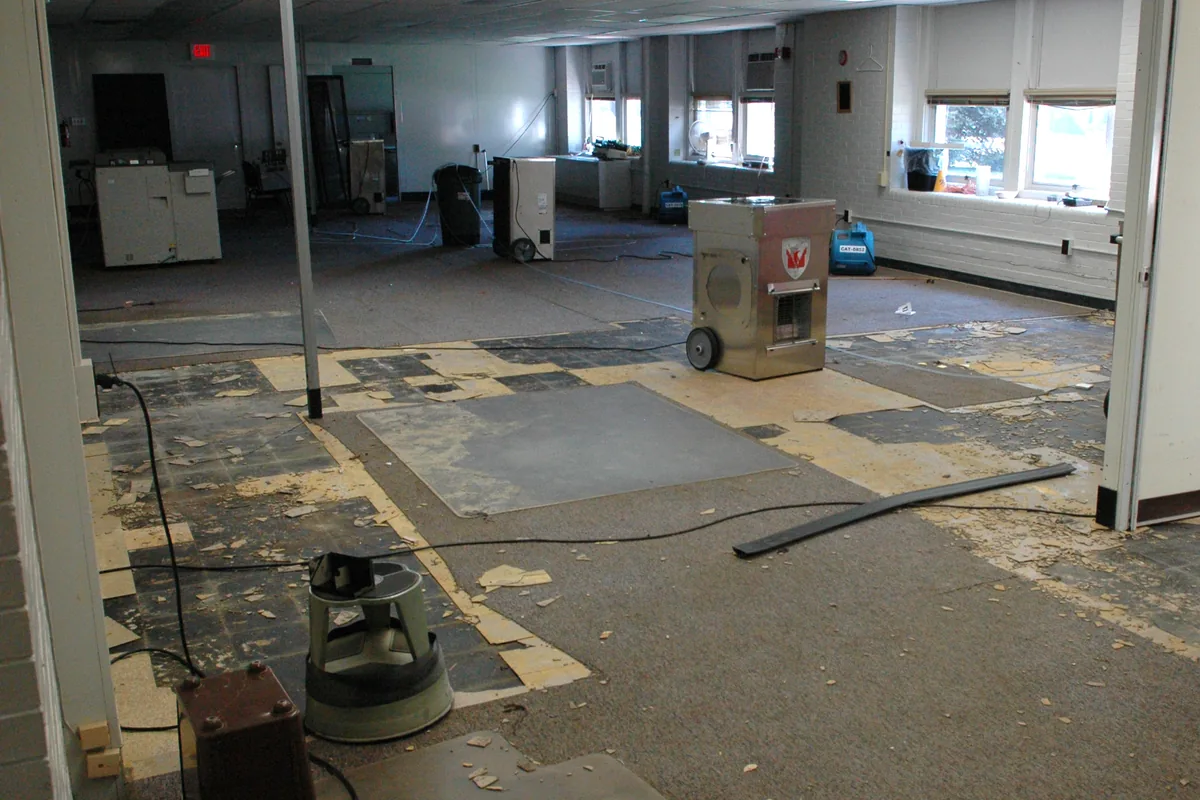
Extraction removes standing water. Drying uses air movement and dehumidification to reduce moisture in materials. Reconstruction replaces what was removed or damaged: drywall, flooring, cabinets, trim, and paint. These are separate scopes, and they are often performed by different providers. A quote that includes only extraction and drying will look very different from one that includes reconstruction, even for the same room.
When you compare quotes, ask each provider to state whether their number covers cleanup only, reconstruction only, or both. If both, ask for a breakdown. This is the single most useful step for avoiding confusion later. For more on the drying side, see the Structural Drying guide.
04 / UNDERSTAND THE PROCESS
A simple worksheet for separating the work
Use a plain sheet of paper or a notes app. Draw three columns: source repair, cleanup, and reconstruction. Under each column, list what you know from your documents and what you can see. This turns a confusing pile of receipts into a clear picture of what is done and what remains.
- Source repair column: what failed, who repaired it, date of repair, and any written description from the plumber.
- Cleanup column: extraction date, drying equipment used, monitoring dates, and any materials removed.
- Reconstruction column: rooms or materials still damaged, removed, or unfinished.
- Open questions: anything you cannot confirm from the documents, such as whether a wall cavity was opened or whether drying was completed.
This worksheet is not a formal estimate. It is a preparation tool. It helps you ask specific questions instead of describing the whole event from memory. If you are unsure whether a material is still wet, note that as an open question rather than guessing.
05 / UNDERSTAND THE PROCESS
Preparing for a quote call
Before you call about remaining work, have your plumber's receipt, mitigation invoice, and worksheet nearby. Be ready to describe the timeline in a few sentences: when water appeared, when the source was repaired, when drying started, and when it ended. Mention any rooms or materials still affected. Ask the person you speak with to explain what their quote would include and what it would not.
If you are dealing with standing water or active moisture, avoid electrical hazards. Do not enter areas where water may be in contact with outlets, cords, or electrical panels. Contact qualified help for electrical concerns. Where it is safe to do so, reasonable mitigation such as stopping the source and removing valuables from wet areas can continue while you arrange professional assistance.
06 / UNDERSTAND THE PROCESS
What to ask each provider
Ask the plumber to confirm in writing what was repaired and whether any further source work is recommended. Ask the mitigation provider to confirm what cleanup tasks were performed and whether drying was completed or is still in progress. Ask any reconstruction provider to list the materials and rooms included in their scope. These questions keep the three scopes separate.
- Can you put your scope in writing, including what is excluded?
- Does this quote assume the source repair is complete?
- Does this quote include drying, or only reconstruction?
- Are there any areas that still need to be inspected before a firm scope can be given?
07 / UNDERSTAND THE PROCESS
Keeping your records organized
Store the plumber's receipt, mitigation invoice, and any reconstruction estimates together. Add a one-page timeline and your worksheet. If you take photos, keep them in the same folder with dates. This record helps you explain the sequence to anyone you call and reduces the chance of paying twice for the same scope or missing a step.
If you are unsure whether a document proves source repair or cleanup, read the line items slowly. Look for words like repair, replace, extract, dry, monitor, remove, and install. Those words usually point to the scope. When in doubt, ask the provider to clarify in writing rather than assuming.
YOUR WRITTEN-SCOPE CHECKLIST
Turn the conversation into clear answers.
Check an item when you understand how it is addressed in the written scope. These checks organize your questions; they do not certify the condition of a property.
CHECK A WRITTEN ESTIMATE
What do the listed charges add up to?
Enter amounts from an estimate you already have. This adds your figures; it does not predict restoration prices. Blank fields count as zero, so confirm missing charges with the provider.
Only the amounts entered are included. Taxes, rebuilding, source repair and changes may be additional.
FREE QUOTE-PREPARATION TOOL
Know what to say when you call.
Build a short description using what you already know. Your notes stay on this page; this does not send a request or book service.
Your call notes
Questions to ask: The plumber's receipt documents the cause repair. The mitigation invoice documents the water cleanup. Keep both, note the dates, and separate reconstruction from either one before you compare quotes. Do you serve my address? What assessment fees apply, and what is excluded?
Common questions
Does a plumber's receipt cover water damage cleanup?
Usually not. A plumber's receipt typically documents the source repair, such as fixing a failed supply line or drain. Water extraction, drying, and moisture monitoring are separate tasks that may appear on a mitigation invoice.
Can a mitigation invoice replace a plumber's receipt?
No. A mitigation invoice generally documents water cleanup tasks, not the plumbing repair that stopped the source. Keeping both documents helps show the full sequence: what failed, when it was repaired, and what cleanup followed.
Why do quotes for the same damage look so different?
Quotes often differ because they cover different scopes. One may include only extraction and drying, while another includes demolition, disposal, or reconstruction. Ask each provider to list what is included and what is excluded so you are comparing the same work.
What should I have ready before calling about a quote?
Have your plumber's receipt, mitigation invoice, a short timeline of events, and a list of rooms or materials still affected. Also note any areas you have not been able to inspect. This helps the person you call understand what is already done and what remains.
YOUR NEXT STEP
A clearer conversation.
A more useful quote.
Have your ZIP code and property details ready. Confirm address coverage, fees and the proposed scope before booking.
Call for Quote · (833) 628-1561 ↗Houston Water Recovery connects callers with independent providers. Availability, qualifications, work and pricing are confirmed by the provider.
Sources & further reading
This guide explains public guidance and questions to ask. It is not a property assessment or a documented customer case, and no technician review is claimed.
CDC: Electrical hazards after flooding ↗EPA: Flooded homes cleanup guidance ↗