

THE QUICK ANSWER
What should you know first?
You usually do not need to tear out every kitchen floor covering after a leak. The practical split is: stop the source, extract standing water, dry what can be dried, and remove only materials that cannot be dried or that block drying. Keep removal and replacement as separate line items from extraction and drying so you can compare quotes.
Prepare your questions ↓AT A GLANCE
The decisions behind the quote.
Source repair is not cleanup
A failed supply line, appliance leak, or drain backup must be stopped or repaired before drying can hold. Cleanup and drying address the water that already spread.
Extraction and drying are not recon…
Extraction removes standing water; drying manages moisture in materials and air. Reconstruction replaces what was removed or cannot be restored.
Quote scope is not final cost
A quote may list removal, drying equipment, monitoring, and replacement allowances separately. Ask whether the written price is fixed for a defined scope or an estimate, and how any added work would be approved.
01 / UNDERSTAND THE PROCESS
Start with the source, not the flooring
Before deciding how much flooring to remove, confirm that the water source is stopped. A supply line, appliance connection, or drain issue that is still active will keep adding moisture and make drying ineffective. If the source involves electricity or a wet appliance, avoid contact with outlets, cords, and panels, and contact qualified help. The CDC notes that electrical hazards are a serious risk after flooding, and the same caution applies to a wet kitchen.
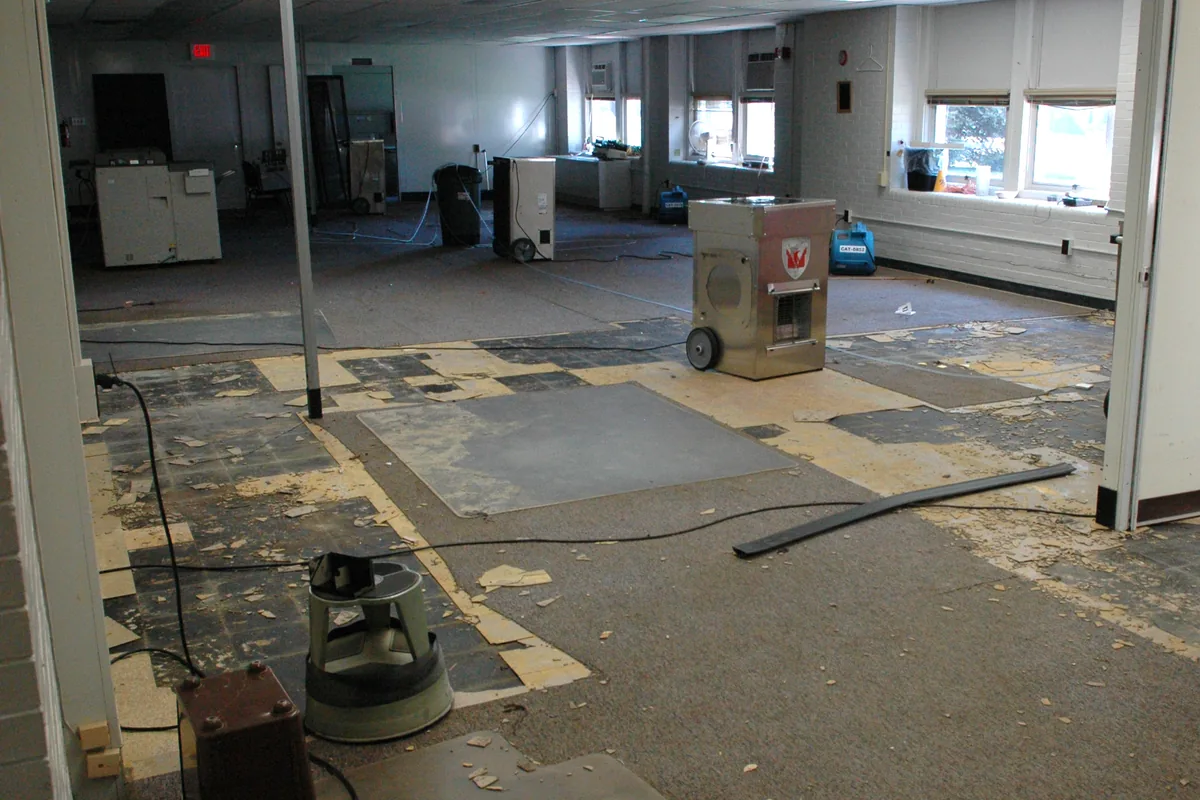
Once the source is controlled, separate the work into three buckets: source repair, water cleanup and drying, and reconstruction. Source repair is a plumbing or appliance fix. Cleanup and drying is extraction, air movement, dehumidification, and monitoring. Reconstruction is replacing flooring, subfloor, baseboards, or cabinets that cannot be dried or restored. Mixing these buckets makes it hard to tell whether a quote is high because of drying, removal, or replacement.
02 / UNDERSTAND THE PROCESS
Use material behavior as your first filter
Different kitchen floor coverings respond differently to water. Sheet vinyl and linoleum may trap water at seams and edges, but the surface itself can sometimes be dried if water did not get underneath. Ceramic and porcelain tile are water-resistant, but the grout, thinset, and subfloor can hold moisture. Laminate and engineered wood often swell or delaminate, and solid hardwood can cup or buckle. Luxury vinyl plank may be water-resistant, but water can still migrate through seams into the subfloor.
- Sheet vinyl: check for lifted edges, trapped water underneath, and whether the subfloor is saturated.
- Tile: check grout lines, hollow spots, and moisture in the setting bed; tile may stay while the assembly dries.
- Laminate: look for swelling, soft edges, and seam separation; these usually mean the plank cannot be restored.
- Engineered wood: check for delamination and cupping; surface drying may not reverse core damage.
- Solid hardwood: check for cupping and buckling; some boards may be dried in place, but severe movement may require removal.
- Luxury vinyl plank: check for water trapped beneath the plank and whether the subfloor can dry.
03 / UNDERSTAND THE PROCESS
Ask for moisture evidence, not just a visual inspection
A visual inspection can miss water under a floor that looks dry on top. Moisture meters and pin meters can show whether the subfloor, cabinets, or wall cavities are still wet. Ask the provider to record readings before and during drying, and to explain what readings would trigger additional removal. This is the difference between a scope based on evidence and a scope based on guesswork.
If the flooring is removed, the exposed subfloor should also be checked. A dry-looking subfloor can still hold moisture, and covering it too soon can trap water. The EPA's flooded-homes guidance emphasizes cleaning and drying before rebuilding, which applies here: do not replace flooring over a subfloor that has not been dried and checked.
04 / UNDERSTAND THE PROCESS
Decide removal by three questions
- Can this material dry in place without losing its structure or trapping water?
- Does the material block drying of the subfloor, cabinets, or wall-floor joint?
- Is the material already damaged in a way that drying cannot reverse?
If the answer to the first question is yes and the second is no, selective removal may not be needed. If the material blocks drying or is already damaged, removal is part of cleanup. If removal is needed only to replace damaged flooring after drying, that is reconstruction. Keeping those categories separate helps you compare quotes and understand what you are paying for.
05 / UNDERSTAND THE PROCESS
Build a scope comparison worksheet
Use a simple worksheet to compare quotes. List each task as a separate line: source repair, extraction, drying equipment, monitoring, removal, disposal, subfloor drying, and replacement. For each quote, mark whether the task is included, excluded, or listed as an allowance. This makes it visible when one quote includes drying but not replacement, and another includes replacement but not drying.
- Source repair: who fixes the leak, and is it included or separate?
- Extraction: is standing water removal included?
- Drying: what equipment, how many units, and how long is monitoring included?
- Removal: which materials are removed, and how is disposal handled?
- Subfloor: is drying or replacement of the subfloor included?
- Replacement: what flooring is included, and is it an allowance or a fixed line?
- Exclusions: what would trigger additional cost, such as hidden moisture or cabinet removal?
The Structural Drying guide explains how drying equipment and monitoring are typically scoped, which can help you ask better questions when comparing quotes.
06 / UNDERSTAND THE PROCESS
Prepare for the quote call
Before you call, gather a few facts: when the water appeared, whether the source is stopped, what flooring material is affected, and whether you have photos or moisture readings. Ask each provider to separate removal from drying and replacement in their written scope. Ask what they will check before removing anything, and what would make them stop and reassess. If a provider cannot explain the difference between cleanup and reconstruction, that is a sign to ask more questions.
Do not delay reasonable mitigation while waiting for quotes. If water is standing, removing it and starting airflow can limit damage. If the area involves electrical hazards, contaminated water, or structural concerns, avoid contact and contact qualified help. The goal is to act safely, then compare scopes with clear evidence.
YOUR WRITTEN-SCOPE CHECKLIST
Turn the conversation into clear answers.
Check an item when you understand how it is addressed in the written scope. These checks organize your questions; they do not certify the condition of a property.
CHECK A WRITTEN ESTIMATE
What do the listed charges add up to?
Enter amounts from an estimate you already have. This adds your figures; it does not predict restoration prices. Blank fields count as zero, so confirm missing charges with the provider.
Only the amounts entered are included. Taxes, rebuilding, source repair and changes may be additional.
FREE QUOTE-PREPARATION TOOL
Know what to say when you call.
Build a short description using what you already know. Your notes stay on this page; this does not send a request or book service.
Your call notes
Questions to ask: Decide removal by material, moisture evidence, and whether the assembly can dry in place. Keep source repair, extraction and drying, and reconstruction as separate scope lines. Do you serve my address? What assessment fees apply, and what is excluded?
Common questions
Can wet laminate flooring be dried in place?
Laminate often swells and loses its locking structure once wet, so drying in place may not restore it. A moisture check and visual inspection of edges and seams can show whether it has already deformed. If it has, removal is usually part of cleanup, not reconstruction.
Does tile need to come up after a kitchen leak?
Tile itself may survive, but the setting bed and subfloor can stay wet underneath. Removing a few tiles may be enough to dry the assembly, or the tile may need broader removal if moisture is trapped. The decision should follow moisture readings, not appearance alone.
Should I remove baseboards and cabinets during kitchen floor drying?
Baseboards are often removed to expose the wall-floor joint and allow airflow. Cabinets are different: they may be dried in place with directed airflow, or they may need partial removal if the cabinet base is saturated.
How do I compare a removal quote with a drying quote?
Put them side by side as separate scopes. One quote may include extraction, drying equipment, and monitoring but exclude flooring replacement. Another may include removal and replacement but not drying.
YOUR NEXT STEP
A clearer conversation.
A more useful quote.
Have your ZIP code and property details ready. Confirm address coverage, fees and the proposed scope before booking.
Call for Quote · (833) 628-1561 ↗Houston Water Recovery connects callers with independent providers. Availability, qualifications, work and pricing are confirmed by the provider.
Sources & further reading
This guide explains public guidance and questions to ask. It is not a property assessment or a documented customer case, and no technician review is claimed.
CDC: Electrical hazards after flooding ↗EPA: Flooded homes cleanup guidance ↗